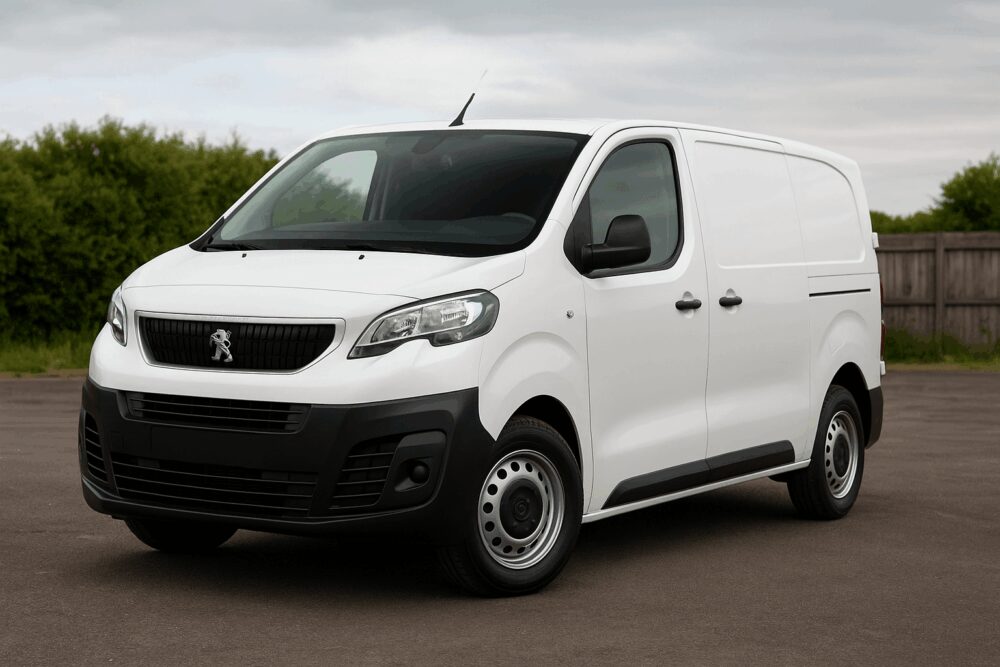
You can sell a van without a V5C logbook in the UK, and it is not illegal to do so. The V5C proves who the registered keeper is, not who owns the vehicle. That distinction matters enormously, and understanding it will determine how smoothly your sale goes, how much you receive, and whether you stay protected after the van leaves your hands.
Can You Legally Sell a Van Without a V5C Logbook?
Yes — selling a van without a V5C is legal. The logbook records the registered keeper, not legal ownership. Think of it like a library card: it proves you are the person associated with the book, not that you bought it. You can own a van outright and still have no V5C in your name.
That said, buyers — particularly private buyers — will be more cautious without one. Transparency is not optional here; it is your legal and practical shield. You must disclose the missing document upfront. Concealing it, or implying it exists when it does not, can cross into fraud.
Your legal obligations as a seller remain the same with or without a V5C. You must notify the DVLA that the van has changed hands, provide accurate information about the vehicle, and ensure you are not selling a van you have no right to sell.
Why You Might Not Have a V5C for Your Van
Missing logbooks are more common than most people realise. The most frequent cause is simple: it was lost or misplaced during a house move, a clear-out, or a chaotic handover. But there are several other legitimate reasons.
You may have purchased the van from a private seller who never handed over the V5C — a frustratingly common oversight. The van may have been inherited or gifted, with paperwork never formally transferred. The document could have been destroyed in a flood, fire, or theft. If the van was recently imported, UK registration may still be pending. And if a previous keeper notified the DVLA of a change, processing delays can mean the new V5C simply has not arrived yet.
None of these situations make the van unsellable. They do, however, require a clear plan.
Step 1 — Apply for a Replacement V5C Before You Sell
Getting a replacement V5C before selling is almost always worth the wait. A van sold with a logbook will consistently attract more interest and a stronger offer than one sold without.
1
Complete DVLA Form V62
The V62 is the application form for a duplicate V5C. You can download it from the DVLA website or pick one up at a Post Office. The fee is £25. If the van is registered in your name, this is straightforward — fill in the form, pay the fee, and send it to the DVLA.
2
Choose Your Application Route
You can apply by post or, in some cases, online through the DVLA’s digital services. The postal route typically takes up to six weeks. Online processing can be faster, though availability depends on your specific circumstances. If time is short, factor that six-week window into your sale timeline.
3
Handle Complications Early
If the van is not currently registered in your name, additional steps apply. You will need to provide evidence of purchase or ownership before the DVLA will issue a replacement. Be aware that the DVLA may also reject an application if there are unresolved issues on the vehicle’s record — a SORN discrepancy, for example, or outstanding queries from a previous keeper.
Pro tip
Even if you decide to sell without V5C documents, starting the V62 application immediately gives you something concrete to show buyers — proof that the process is underway.
Step 2 — Gather Alternative Documentation to Support the Sale
A missing V5C does not mean a missing paper trail. Assemble every document you have, because together they build a credible ownership story.
MOT certificates are particularly valuable. They show the van’s registration, mileage history, and test dates — an independent, government-linked record that is hard to dispute. Service history, receipts, and maintenance invoices add further weight. Insurance documents in your name confirm you were the keeper. Purchase receipts from when you bought the van establish the chain of ownership.
Old tax renewal reminders — the V11 form — include the vehicle’s reference number and can assist a buyer in verifying the van’s identity. The more of these you can produce, the more confidence a buyer has that this is a legitimate sale.
Step 3 — Notify the DVLA When You Sell Without a V5C
This is the step most sellers either skip or get wrong — and it is the one that can haunt you long after the van is gone.
If you have no V5C, you cannot use the standard tear-off section to notify the DVLA. Instead, write directly to the DVLA at: DVLA, Swansea, SA99 1BD. Your letter should include the van’s registration number, make, model, and VIN; your full name and address; the buyer’s full name and address; and the date of sale.
Warning
If you do not notify the DVLA, you remain the registered keeper. That means any fines, congestion charges, or road tax liability incurred after the sale can — and often will — come back to you. The buyer driving through a camera zone on a Tuesday afternoon becomes your problem on paper until the DVLA records are updated.
Always create a written bill of sale signed by both parties. Include the same details as your DVLA letter, plus the agreed sale price. Keep a copy. This document is your evidence that the van left your possession on a specific date — critical if a dispute arises later.
Who Will Buy a Van Without a V5C — and What to Expect
Different buyers respond to a missing logbook very differently. Knowing where to go saves time and protects your price.
Specialist vehicle buyers and instant-offer van buying services are the most pragmatic option when you want to sell your van quickly without getting tied up in paperwork disputes. These buyers deal with missing documents regularly and have processes in place to handle them — they will typically verify the van’s identity through the VIN and DVLA records rather than relying solely on the V5C.
Scrap yards and salvage dealers will buy without a V5C but will pay scrap value only — do not expect more. Trade buyers and dealers may accept the van but will price the documentation risk into their offer. Private buyers are the hardest to convince; many will walk away, and those who stay will negotiate hard. Auction houses vary — some accept vans without V5Cs but may impose bidding restrictions or disclosure requirements.
Realistically, selling without a V5C typically reduces the sale price by somewhere between 10 and 30 percent compared to a fully documented van. That gap narrows significantly if you have strong supporting documentation and have started the V62 replacement process.
How to Sell a Van for Scrap Without a V5C
Scrapping a van without a V5C is entirely possible, and the process is more straightforward than many sellers expect.
Scrap dealers are legally required to verify your identity under the Scrap Metal Dealers Act 2013 — bring valid photo ID. That same legislation prohibits cash payments; all transactions must be made by bank transfer or cheque. You do not need a V5C to scrap the van, but you must demonstrate that you are the keeper or owner.
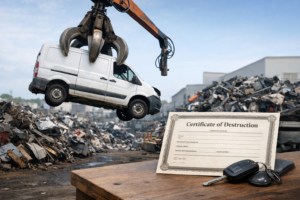
After scrapping, notify the DVLA in writing using the same approach described above if you have no V5C. Most importantly, obtain a Certificate of Destruction (CoD) from the Authorised Treatment Facility (ATF) that processes the van. This certificate is your legal proof that the vehicle has been destroyed — it ends your registered keeper liability and protects you from any future claims.
Pro tip
Keep the CoD permanently. It is the documentary equivalent of a receipt for a transaction that can otherwise come back to you years later.
Selling a Van Without a V5C Privately — Tips to Protect Yourself
Private sales without a V5C require more care, not less. The risk of things going wrong — for both parties — is higher, and the consequences of a poorly documented sale fall on the seller first.
Be fully transparent about the missing V5C from the first conversation. Hiding it is not just poor practice — it can constitute fraud if the buyer later argues they were misled. Provide the buyer with a copy of the V62 form so they understand how to apply for a new V5C in their name after purchase.
Strongly advise the buyer to run a full HPI check — a vehicle history check that reveals outstanding finance, write-off status, and stolen vehicle flags. This protects them and demonstrates your good faith. Photograph all documents and the van thoroughly before handover. For high-value transactions, consider having a solicitor or an independent witness present when the bill of sale is signed.
Red Flags: When a Missing V5C Should Make You Think Twice
If you are on the buying side of a no-V5C transaction, the missing document is not automatically a problem — but it demands due diligence.
Stolen vehicles are frequently sold without V5Cs because the logbook would identify the true registered keeper. Always run an HPI or equivalent vehicle history check before purchasing any van without a logbook. Check that the VIN — the Vehicle Identification Number stamped on the chassis — matches across every available document. Be wary of any seller who cannot clearly explain why the V5C is missing or who becomes evasive when you ask to verify the van’s identity independently.
A legitimate seller with a genuinely lost logbook will welcome scrutiny. One who resists it is telling you something.
DVLA Rules, Fines, and Your Legal Responsibilities
Sellers are not fined for not having a V5C. The document’s absence is not itself an offence. However, the obligation to notify the DVLA of a change of keeper exists regardless — and failing to meet it carries real consequences.
Under the Road Vehicles (Registration and Licensing) Regulations 2002, the registered keeper is responsible for the vehicle until the DVLA updates its records. That means road tax liability, penalty charge notices, and any fines issued to the van after the sale date can be directed to you if you have not formally notified the DVLA. The buyer may never register the van in their name — people forget, delay, or simply do not bother — and in that scenario, you remain on the hook indefinitely.
Contact the DVLA at DVLA, Swansea, SA99 1BD, or use the relevant online service where available. Keep copies of all correspondence. The DVLA does not send confirmation letters automatically, so your own records are your only evidence of notification.
Post-Sale Checklist — What to Do After Selling a Van Without a V5C
- Write to the DVLA immediately with the van’s details, your details, the buyer’s details, and the date of sale
- Retain a signed copy of the bill of sale with the agreed price and both parties’ signatures
- Obtain the buyer’s full name and address in writing before handover — not just a phone number
- If scrapping, collect the Certificate of Destruction from the ATF on the day
- Set a reminder for 4–6 weeks to check whether the DVLA has updated its records (you can check vehicle tax status online using the registration number)
- If the buyer has not registered the van after 8 weeks, contact the DVLA to flag the situation and protect yourself from ongoing liability
Warning
“I sold it” is not a legal defence if you cannot prove you notified the DVLA. The paperwork is the protection.
Common Misconceptions About Selling a Van Without a V5C
Misconception 1: No V5C means you cannot legally sell the van.
Wrong. The V5C proves registered keeper status, not ownership. You can sell a van you own without ever having held the logbook, provided you are transparent and follow the correct notification process.
Misconception 2: Once the van is sold, your liability ends automatically.
It does not. Liability transfers when the DVLA is notified and updates its records — not when the keys change hands. A buyer who never registers the van leaves you exposed until you actively resolve it.
Misconception 3: A bill of sale is optional for private sales.
It is not legally mandatory, but it is practically essential. Without a signed bill of sale, you have no dated evidence that the van left your possession — leaving you vulnerable to any liability that arises after the sale.
Frequently Asked Questions
Is it illegal to sell a van without a V5C logbook in the UK?
No, it is not illegal. The V5C identifies the registered keeper, not the legal owner. You can sell a van you own without a V5C, provided you are transparent with the buyer and notify the DVLA of the change of keeper after the sale.
How do I get a replacement V5C before selling my van?
Complete DVLA form V62, available from the DVLA website or any Post Office. Pay the £25 fee and submit the form by post to the DVLA in Swansea. In some cases, an online application route is available, which may be processed faster.
How much does a replacement V5C cost from the DVLA?
A replacement V5C costs £25, payable to the DVLA when you submit form V62.
Can I scrap a van without a V5C logbook?
Yes. Scrap dealers do not require a V5C, but they are legally required to verify your identity under the Scrap Metal Dealers Act 2013. Bring photo ID. After scrapping, obtain a Certificate of Destruction from the Authorised Treatment Facility — this ends your registered keeper liability.
Will I get less money for my van if I don’t have a V5C?
Almost certainly, yes. The reduction varies depending on the buyer type and the supporting documentation you can provide, but a missing logbook typically reduces the sale price by 10 to 30 percent compared to a fully documented van.
What documents can I use instead of a V5C when selling a van?
MOT certificates, service history records, insurance documents in your name, purchase receipts, and V11 tax renewal reminders all help establish the van’s identity and ownership history. No single document replaces the V5C, but together they significantly strengthen buyer confidence.
How do I notify the DVLA I’ve sold a van when I have no logbook?
Write directly to the DVLA at DVLA, Swansea, SA99 1BD. Include the van’s registration number, make, model, and VIN; your full name and address; the buyer’s full name and address; and the date of sale. Retain a copy of the letter.
Can a private buyer register a van in their name without a V5C?
Yes. The buyer can apply for a new V5C using form V62, providing evidence of their ownership or purchase. The DVLA will investigate the vehicle’s history and, if satisfied, issue a new logbook in the buyer’s name.
What should I include in a bill of sale when selling a van without a logbook?
Include the full names and addresses of both buyer and seller, the van’s registration number, make, model, VIN, and mileage at the time of sale, the agreed sale price, the date of sale, a statement confirming no V5C is available, and signatures from both parties. Both parties should retain a copy.
How long does it take to get a replacement V5C from the DVLA?
By post, allow up to six weeks. Online applications, where available, may be processed more quickly. If you are working to a sale deadline, factor this timeline in and consider whether to proceed without the V5C or delay the sale.
Key takeaways
- Selling a van without a V5C is legal — the logbook proves registered keeper status, not ownership, and its absence does not prevent a legitimate sale
- Apply for a replacement V5C using form V62 (£25) before selling if at all possible — it will almost always result in a better price
- Notify the DVLA in writing immediately after the sale, whether or not you have a V5C — your liability as registered keeper continues until the DVLA updates its records
- Specialist van buyers and scrap dealers are the most practical options when selling without a logbook; private buyers are the hardest to convince and will negotiate the hardest
- A signed bill of sale is your most important protection — it is dated evidence that the van left your hands, and without it, any post-sale liability is difficult to dispute