
If you’ve been in an accident and your van is sitting on the drive looking sorry for itself, here’s the straight answer: you can sell it, and you can get a real cash offer — even if it’s written off. What you’re paid depends on the type and extent of the damage. This guide explains exactly how that works, so you don’t leave money on the table.
What Does “Selling an Accident-Damaged Van” Actually Mean?
Selling an accident-damaged van means transferring ownership of a vehicle that has sustained collision, impact, or structural damage — whether that damage has been repaired, is unrepaired, or has resulted in an insurance write-off.
The buyer pays a price that reflects the van’s condition. That price is not arbitrary. It is calculated using the van’s pre-accident value, the category of damage (if it has been written off), the cost to repair it, and what it can be sold for in parts or at auction.
Think of it like selling a house with a damp problem. A cash buyer will purchase it, but they price in the cost of fixing the damp. The same logic applies to a damaged van — the offer reflects what the buyer needs to spend to put it right, or what they can recover by breaking it for parts.
Technical Definition: Damage Categories and What They Mean for Your Offer
In the UK, insurers use a formal write-off category system managed by the Association of British Insurers. Understanding these categories is the single most important thing a seller can do, because the category directly determines what a crash damaged van buyer will pay.
Category N — Non-structural damage only. Think bodywork, lights, or bumpers. The van is repairable and roadworthy once fixed. Category N vans attract the highest offers among write-offs because repair costs are predictable and the van can be returned to the road.
Category S — Structural damage to the chassis, frame, or crumple zones. The van can legally return to the road after a certified repair, but that repair is complex and must be documented. Offers are lower than Cat N because the repair bill is higher and the vehicle’s history will always show the S marker.
Category B — Body parts can be salvaged, but the shell must be crushed. The van cannot return to the road. Buyers are salvage specialists. The offer reflects parts value only.
Category A — Scrap only. No parts can be reused. Offers are minimal and based purely on scrap metal weight.
Vans that have been damaged but not written off by an insurer sit outside this system entirely. Minor accident damage — a dented panel, a cracked bumper, a smashed wing mirror — has no category, and these vans often attract offers surprisingly close to their undamaged market value.
How It Works: From Damage Assessment to Cash in Your Account
1
Establish what category your van is in (or isn’t)
If your insurer has already assessed the van, you will have been given a write-off category. If you haven’t claimed on insurance — perhaps because the damage is minor or the excess isn’t worth it — your van has no category and is simply described as having unrepaired damage. Know which situation applies before you approach any buyer.
2
Gather your documentation
Buyers need the V5C logbook, the MOT certificate, any service history, and — critically — any written confirmation of the write-off category from your insurer. For a damaged van valuation UK buyers will want to know the pre-accident mileage and whether any repairs have already been carried out.
3
Get multiple valuations
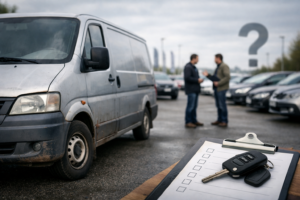
One quote is not a market. Prices vary significantly between buyers. A specialist salvage buyer, a general van dealer, and a direct online buyer all have different cost bases and different end markets for the vehicle. Getting three or more offers takes thirty minutes and can add hundreds of pounds to what you receive.
4
Accept the offer and arrange collection
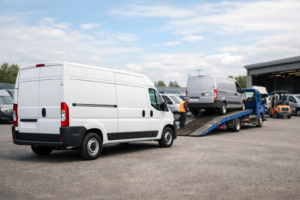
Reputable buyers collect the van from your location. You hand over the keys, sign the transfer paperwork, and receive payment — typically by bank transfer on the same day. You then notify the DVLA that you’ve sold the vehicle.
Real-World Examples: What Sellers Actually Receive
Example 1 — Minor body damage, no write-off
A Ford Transit Custom with a caved-in rear quarter panel and a broken tail light. The van drives perfectly. No insurance claim was made. A specialist buyer offers £7,200 against a clean-condition book value of £9,500. The gap represents the repair cost plus the buyer’s margin. The seller receives cash the same day without spending weeks at a bodyshop.
Example 2 — Category N write-off
A VW Crafter involved in a rear-end shunt. The insurer writes it off as Category N — damaged bumper, lighting cluster, and boot mechanism, but no structural involvement. The pre-accident value was £14,000. A crash damaged van buyer offers £9,800. The buyer’s calculation: repair cost of approximately £2,800, plus auction margin, subtracted from the repaired resale value.
Example 3 — Category S write-off
A Mercedes Sprinter with a bent chassis rail after a side-impact collision. Insurer writes it off as Category S. Pre-accident value was £18,000. The seller receives offers between £5,500 and £7,000. The wide range reflects different buyers’ confidence in their repair networks and their target resale markets.
Common Misconceptions About Selling a Written-Off Van
Misconception 1: “A write-off is worthless.”
It isn’t. Category N and Category S vans are bought and resold every day. Many end up repaired and back on the road. Even Category B vehicles have real parts value. The word “write-off” means the insurer decided repair wasn’t economical for them — it doesn’t mean the van has no value to anyone.
Misconception 2: “I have to go through my insurer to sell it.”
You don’t. If your insurer has settled your claim and returned ownership of the van to you — which happens when you keep the salvage — you are free to sell it to whomever you choose. You can sell your broken van directly to a specialist buyer without involving your insurer at all.
Misconception 3: “Minor damage doesn’t affect the offer much.”
It affects it more than most sellers expect. Even a well-repaired accident — one that is properly documented and professionally finished — can reduce a van’s market value by 10–20% because the repair history appears on vehicle checks. Unrepaired damage reduces it further. Buyers price this in because their eventual customers will too.
Warning
Never try to sell an accident-damaged van without disclosing the damage. Selling a vehicle as undamaged when you know it isn’t is fraudulent misrepresentation and can result in the sale being unwound and a civil or criminal claim against you.
Why This Matters: Practical Relevance If You’re Selling Now
Understanding how buyers price accident-damaged vans protects you in two ways.
First, it stops you accepting a low offer simply because you assume the van is worth very little. A Category N van with a pre-accident value of £12,000 should still attract offers well above £6,000. If you’re being offered less, the buyer is pricing in uncertainty you could remove by providing better documentation.
Second, it helps you decide whether to repair before selling. In most cases, repairing a van before selling to a specialist buyer does not increase your net return — the buyer’s offer rises by less than the repair cost. The exception is when the repair is minor, cheap, and removes a write-off marker entirely.
Pro tip
Always check the van’s value on a clean-condition basis before approaching buyers. Tools like Glass’s Guide or CAP HPI give trade valuations. Knowing the undamaged value gives you an anchor to assess whether any offer is reasonable.
Summary
Key takeaways
- The UK write-off category system (N, S, B, A) is the primary driver of what a buyer will pay — Cat N vans sell for significantly more than Cat S, which sell for more than Cat B.
- Vans with unrepaired minor damage but no write-off category often attract offers closest to their clean market value.
- Repair history — even a good repair — reduces a van’s value because it shows on vehicle checks; selling as-is to a specialist is often the better financial outcome.
- Getting three or more offers before accepting is the single most effective way to maximise what you receive when you sell van after accident UK.
- Never conceal damage from a buyer; full disclosure is a legal requirement and protects you from a claim after the sale.
Frequently Asked Questions
Can I sell a written-off van without telling the buyer it’s a write-off?
No. The write-off category is recorded on the vehicle’s HPI history and will appear on any standard vehicle check. A buyer will discover it. More importantly, selling a vehicle while concealing a known write-off is fraudulent misrepresentation. Always disclose.
How long does it take to sell an accident-damaged van?
With a specialist buyer, the process typically takes 24–48 hours from first enquiry to payment. You submit details online, receive an offer, agree a collection time, and receive payment by bank transfer on the day of collection.
Does a Cat S van need a new MOT before I sell it?
Not if you are selling it as a non-runner or to a salvage buyer. If it has a valid MOT and you are selling it as roadworthy, the existing MOT stands. However, a Cat S vehicle that has been repaired and is being returned to the road requires a structural inspection and documentation of the repair — not a standard MOT, but a specialist assessment.
Will I get more money if I repair the van first?
Rarely. The cost of repair almost always exceeds the increase in offer price when selling to a specialist damaged van buyer. The exception is cosmetic damage where a cheap fix removes a visible defect — but even then, the return is marginal. Get an offer before and after a repair quote, and compare the net figures.
What documents do I need to sell a damaged van in the UK?
You need the V5C logbook, the current MOT certificate (if one exists), any service history, and written confirmation of the write-off category from your insurer if the van has been written off. The more documentation you have, the stronger your negotiating position on damaged van valuation UK.