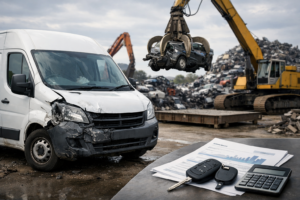
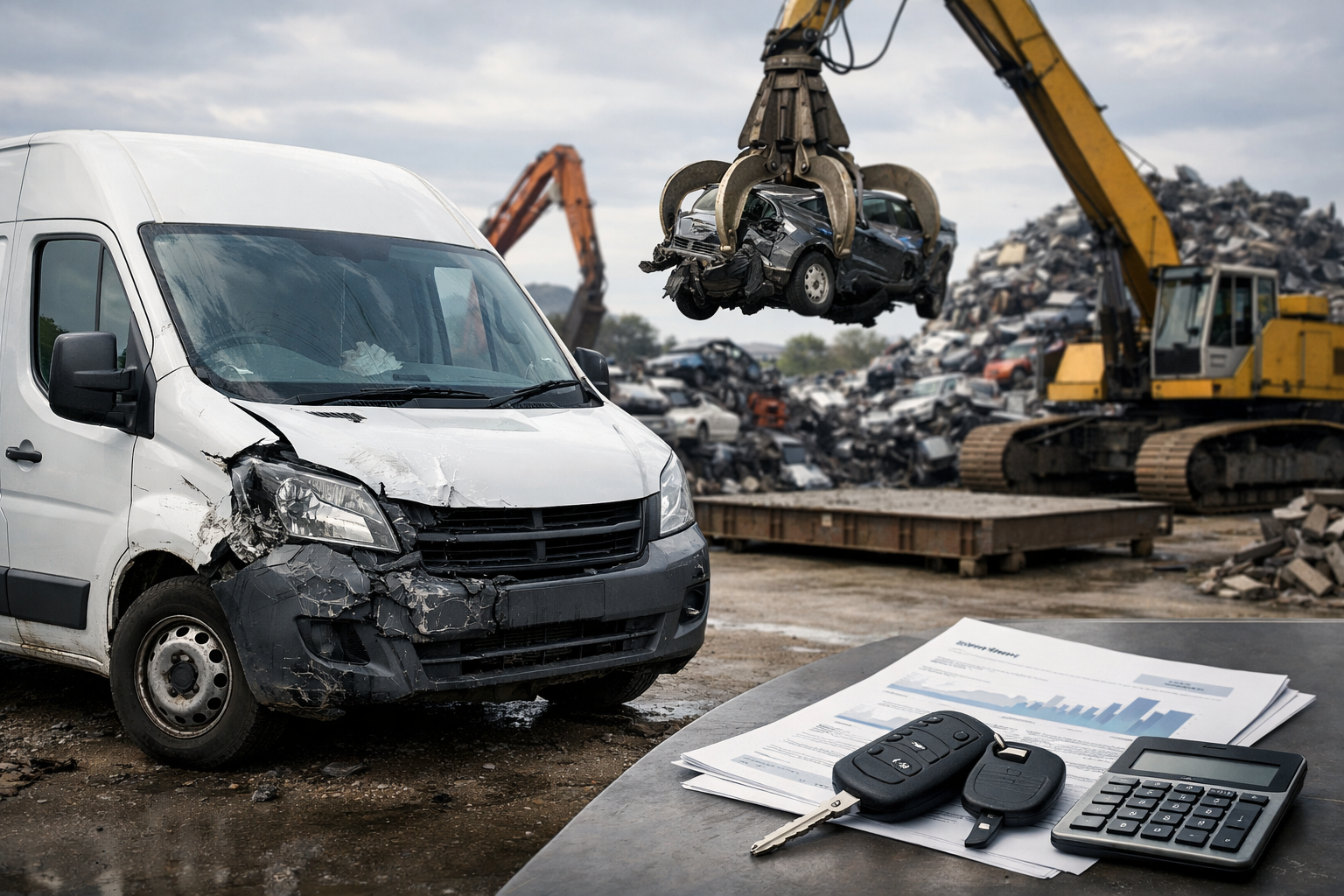
Yes — you can scrap a van with outstanding finance on it, but you cannot do it legally without the lender’s permission first. The finance company holds a legal interest in the van until the debt is settled. Scrapping it without consent could constitute fraud. Here is exactly what you need to know before you act.
What does “scrapping a van with outstanding finance” actually mean?
When you take out a hire purchase (HP) or finance lease on a van, the lender — not you — owns the vehicle until the final payment is made. Outstanding finance means money is still owed on that agreement. Scrapping the van disposes of the asset the lender has a legal claim over.
Think of it like renting a flat and deciding to knock down a wall. The wall is not yours to touch without the landlord’s say-so. The same logic applies here: the van is not fully yours until the finance is cleared.
This matters because thousands of van owners in the UK discover too late that their disposal plans are blocked — or worse, that they have already broken the terms of their finance agreement without realising it.
What is outstanding finance on a van?
Outstanding finance is the remaining balance you legally owe to a lender under a credit agreement secured against your van. The most common types are hire purchase (HP), personal contract purchase (PCP), and finance leases.
Under all three, the finance company retains a legal interest — sometimes called a “charge” — in the vehicle. That interest is registered and can be checked by anyone through a vehicle history check service.
Until you pay off that balance in full, or until the lender formally releases their interest, the van is encumbered. You cannot legally sell, scrap, or otherwise dispose of it without their consent.
How scrapping a financed van actually works
Breaking this down into its key stages makes the process far less daunting.
Get your settlement figure
Contact your finance company and request a settlement figure — the exact amount required to pay off the agreement in full on a specific date. This figure includes any remaining capital, interest calculated to that date, and sometimes an early repayment charge.
Settlement figures are time-sensitive. They are usually valid for 28 days, after which you must request a fresh one. Do not assume the figure on your last statement is the settlement figure — it almost never is.
Compare the settlement figure to the scrap value
A licensed scrap dealer or Authorised Treatment Facility (ATF) will give you a scrap valuation for the van. Compare this to your settlement figure.
If the scrap value exceeds the settlement figure, you are in positive equity. You can use the scrap proceeds to pay off the finance and keep the difference.
If the scrap value is less than the settlement figure, you are in negative equity — a gap you will need to fund from your own pocket before the lender releases the vehicle.
Get lender consent in writing
This is the step most guides skip entirely, and it is the most important one.
Call your lender, explain that you intend to scrap the van on finance disposal, and ask for written confirmation that they consent to the vehicle being destroyed once the settlement figure is paid. Some lenders have a formal process for this; others will handle it case by case. Either way, get it in writing before you hand the van over to anyone.
Handing a financed van to a scrap dealer without lender consent — even if you intend to pay the finance afterwards — can breach your credit agreement and, in serious cases, amount to fraud by misrepresentation.
Settle the finance
Pay the settlement figure. Do this before or simultaneously with the scrapping — never after. Once the lender confirms the debt is cleared, they release their legal interest in the vehicle.
Scrap the van through a licensed ATF
Only use an Authorised Treatment Facility. They are legally required to issue a Certificate of Destruction (CoD) — the document that formally ends the van’s registered existence with the DVLA. Keep this document. It is your proof that the vehicle has been destroyed and removes your liability for future road tax and insurance.
If you want to understand how the scrapping process itself works, the page on how to scrap your van legally and get paid covers the end-to-end process in plain terms.
Real-world examples
Example 1: Positive equity — straightforward disposal
Dave runs a small plumbing business. His Ford Transit Custom has a settlement figure of £4,200. A scrap valuation comes back at £4,800. He contacts his lender, gets written consent, pays the £4,200 settlement from the scrap proceeds, and pockets £600. The ATF issues a Certificate of Destruction. Done.
Example 2: Negative equity — funding the gap
Sarah’s Volkswagen Crafter has a settlement figure of £7,500. The van was written off in a minor flood, and the scrap valuation is only £1,200. Sarah faces a £6,300 shortfall. She has two options: fund the gap herself, or check whether her motor insurance policy covers the outstanding finance (some GAP insurance policies do exactly this). She contacts her insurer first, then her lender, before touching the van.
Example 3: Lease van — different rules entirely
James leases a Renault Trafic through a finance lease. He calls a scrap dealer, who offers to take it. James nearly says yes — but a lease means the van never belonged to him at any point. The finance company owns it outright. Scrapping it without permission would be disposing of someone else’s property. James calls the leasing company instead, who arrange collection and disposal themselves.
Common misconceptions about scrapping a financed van
Misconception 1: “I can scrap it and then pay off the finance.”
This is the most dangerous assumption. The lender’s legal interest exists until the debt is cleared. Disposing of the asset before settling — or without consent — puts you in breach of your agreement. Always settle or get explicit consent first.
Misconception 2: “The finance company won’t find out.”
They will. Scrapping a van on finance in the UK requires a Certificate of Destruction, which is registered with the DVLA. The DVLA notifies the registered keeper. Finance companies routinely monitor their assets, and many use vehicle history databases. Discovery is not a matter of if — it is when.
Misconception 3: “Scrapping clears the debt automatically.”
Destroying the van does not destroy the debt. If you owe £5,000 and scrap the van for £800, you still owe the remaining £4,200. The debt follows you, not the vehicle. This surprises a significant number of people who assume the lender’s security interest disappears with the asset.
Why this matters for you
Getting this wrong is not just a paperwork inconvenience. Breaching a finance agreement can trigger immediate demand for the full outstanding balance, damage your credit file, and in extreme cases lead to legal action.
Getting it right, however, is genuinely straightforward. The process takes a few phone calls and a bit of patience. Lenders deal with early settlements and vehicle disposals regularly — it is not an unusual request.
If your van is off the road, uneconomical to repair, or simply surplus to requirements, understanding the settlement figure process and securing lender consent before scrapping means you can dispose of the van cleanly, legally, and without financial surprises.
Summary
- Outstanding finance means the lender holds a legal interest in the van — you cannot scrap it legally without their consent.
- Always request a formal settlement figure from your lender before making any disposal plans.
- Compare the settlement figure to the scrap value to understand whether you are in positive or negative equity.
- Settle the finance before or simultaneously with scrapping — never after — and get lender consent in writing.
- Only use an Authorised Treatment Facility, and keep the Certificate of Destruction as proof the vehicle has been legally destroyed.
Frequently Asked Questions
Can I scrap a van that is still on finance?
Yes, but only with your lender’s explicit consent and after settling — or simultaneously settling — the outstanding balance. Scrapping a financed van without permission breaches your credit agreement and can constitute fraud.
What is a settlement figure and how do I get one?
A settlement figure is the exact amount needed to pay off your finance agreement on a specific date, including any early repayment charges. Contact your lender directly and request it — they are legally required to provide one within a reasonable timeframe under the Consumer Credit Act.
What happens if the scrap value is less than the finance owed?
You are in negative equity. You must fund the shortfall from your own resources before the lender releases the vehicle. Check first whether you hold GAP insurance, as some policies cover exactly this scenario.
Do I need to tell the DVLA when I scrap a financed van?
The Authorised Treatment Facility handles DVLA notification as part of the Certificate of Destruction process. You should also return the V5C logbook to the DVLA. You do not need to contact the DVLA separately, but keep your copy of the Certificate of Destruction.
Can I scrap a lease van?
Not without the leasing company’s permission — and in most cases, not at all as a private individual. On a finance lease, the leasing company owns the vehicle throughout the agreement. Contact them directly; they will manage disposal.