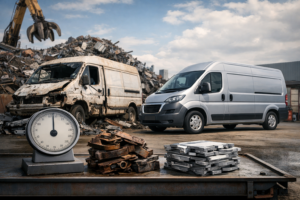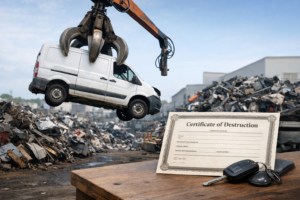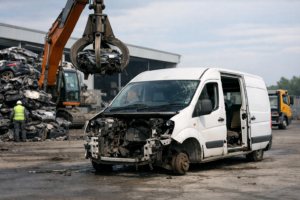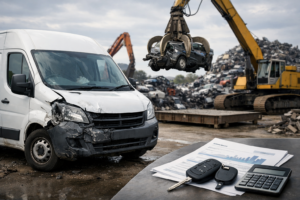
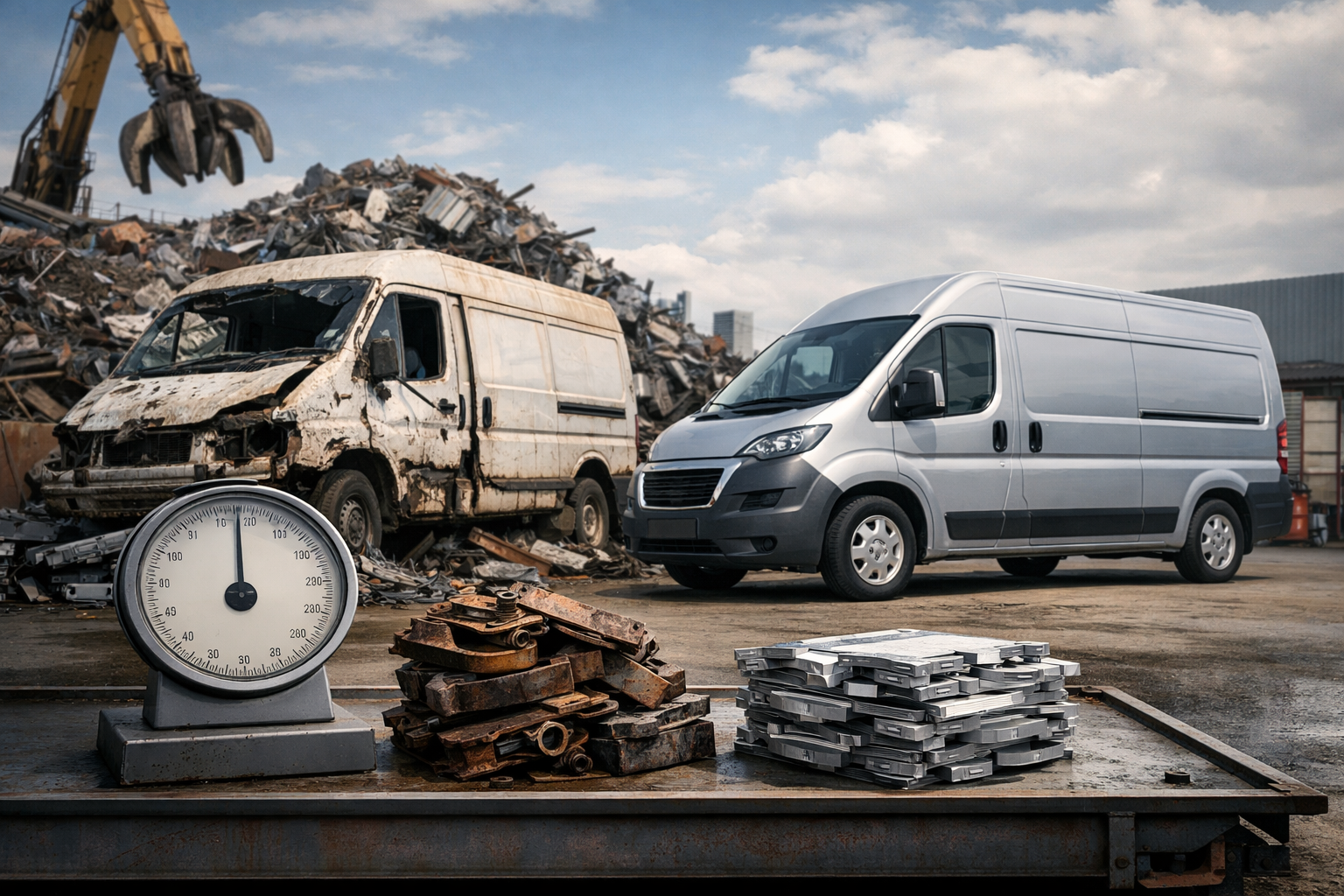
You get one offer for your scrap van. Age and weight determine most of it. Know how they work before you accept a penny.
Scrap van age and weight value are the two levers that move your payout more than anything else. A heavy Luton box van can fetch two or three times what a small city van earns — even if both rolled off the production line the same year. And a pre-2010 van may yield less in catalytic converter metals than a newer equivalent. This article maps it out by body type, so you know exactly what you’re walking into.
- Scrap value is calculated primarily on weight — heavier vans like Lutons and Sprinters earn significantly more than compact city vans
- Older vans (pre-2010) often contain less recoverable precious metal in their catalytic converters, which can reduce the total offer
- The current scrap metal price per tonne fluctuates with global commodity markets — check it the week you sell, not the month before
- Body type matters as much as age: a large panel van outweighs a small one by hundreds of kilograms, and every kilogram counts
- Condition affects whether a van is scrapped or salvaged — salvage almost always pays more, so be honest about what yours can do
Why weight is the single biggest driver of scrap value
Scrap dealers buy metal. That is the whole business. So when they look at your van, the first question is: how many kilograms of recoverable steel, aluminium, and other metals does it contain?
This is where van scrap weight calculation becomes critical. Dealers typically use a van’s kerb weight — the manufacturer’s stated weight of the vehicle empty, with a full fuel tank — as the baseline. They then apply the current scrap steel price per tonne. If steel is trading at £150 per tonne and your van has a kerb weight of 2,000 kg, the raw metal value is around £300 before any deductions.
Look up your van’s kerb weight in the owner’s manual or on the manufacturer’s website before you call a dealer. It takes two minutes and means you can sense-check any offer you receive.
The van kerb weight scrap value relationship is almost linear. Add 500 kg and you add roughly £75 at current average steel prices. That is why body type matters so much — it is the fastest predictor of how heavy a van actually is.
How different van body types compare on weight
Not all vans are built the same. Here is a realistic weight comparison across common body types:
- City/compact vans (e.g. Citroën Berlingo, Ford Transit Connect): kerb weight typically 1,100–1,400 kg
- Medium panel vans (e.g. Ford Transit Custom, Vauxhall Vivaro): kerb weight typically 1,600–1,900 kg
- Large panel vans (e.g. Ford Transit, Mercedes Sprinter): kerb weight typically 1,900–2,400 kg
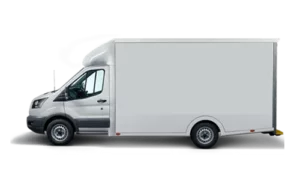
- Luton box vans (Transit or Sprinter chassis with box body): kerb weight typically 2,400–3,000 kg
- Tipper vans (heavy-duty chassis with steel tipper body): kerb weight can exceed 3,000 kg
A Luton van at 2,800 kg versus a Berlingo at 1,200 kg — that is a difference of 1,600 kg. At £150 per tonne, that gap alone is worth £240. Before you even factor in catalytic converter metals or aluminium components.
These figures are illustrative. Actual kerb weights vary by year, engine, and specification. Always confirm the exact figure for your specific vehicle.
How age affects your scrap van offer
Age matters in two distinct ways: the condition of the metal, and the value of the catalytic converter.
Does an older van mean less scrap metal value?
Not necessarily. Steel does not lose its value just because it is old. A 2003 Transit with solid bodywork and no serious corrosion will yield roughly the same steel tonnage as a 2010 model of the same type. The metal is the metal.
Where age does hurt you is in corrosion. Heavily rusted panels and chassis sections reduce the quality of the steel recovered. Some dealers will factor this in. If your van has significant rust, expect the offer to reflect that.
Why pre-2010 vans may earn less from catalytic converters
This is the angle most scrap price guides miss entirely. Catalytic converters contain platinum group metals (PGMs) — platinum, palladium, and rhodium — which are genuinely valuable. A single catalytic converter can add £50–£200 to a scrap offer depending on the vehicle and the current PGM spot price.
Older vans, particularly those manufactured before 2010, tend to have smaller catalytic converters with lower loadings of these precious metals. Emissions regulations were less stringent, so manufacturers used less PGM material. Post-2010 Euro 5 and Euro 6 vans typically carry larger, richer converters.
This is what the older van scrap price picture often misses. Two vans with identical kerb weights — one from 2007, one from 2013 — can produce meaningfully different offers because of what is inside the exhaust system, not what is in the bodywork.
Scrap vs salvage: which pays more and how to tell
Salvage means selling a van that still has usable parts or can be repaired and returned to the road. Scrap means the vehicle goes to an Authorised Treatment Facility (ATF) to be depolluted and shredded for raw materials.
Salvage almost always pays more. A working engine, gearbox, or low-mileage body panel has far more value to a parts buyer than the same components reduced to steel tonnage.
If your van runs — even poorly — or has a recent MOT, get a salvage quote first. If the engine is seized, the chassis is bent, or the bodywork is beyond economic repair, scrap is the realistic route.
If you want to understand your options properly before committing, getting a quote from a specialist van buyer lets you see both possibilities side by side without any obligation.
Never remove the catalytic converter before selling for scrap. It is illegal to sell a vehicle with a missing cat, and dealers will deduct its value from the offer anyway — so you gain nothing and risk prosecution.
What else moves the offer up or down
Weight and age are the foundations. But several other factors adjust the final number:
- Current scrap metal prices: Steel trades on global commodity markets. Prices shift weekly. A quote from three months ago is meaningless today.
- Location: Dealers in areas with high transport costs may offer less. A buyer who collects free of charge is often worth more than a higher headline offer with a collection fee attached.
- Tyres: A full set of roadworthy tyres can add value for a salvage buyer, though they add nothing to a pure scrap calculation.
- Fuel type: Diesel vans often have more valuable catalytic converter content than petrol equivalents of the same age.
- Additional metals: Aluminium wheels, copper wiring, and stainless steel components all add small but real amounts above the base steel price.
Frequently Asked Questions
How is scrap van value calculated?
Scrap van value is calculated by multiplying the van’s usable weight in tonnes by the current scrap steel price per tonne, then adding the value of recoverable components like the catalytic converter, aluminium, and copper. The kerb weight is the standard starting point for the weight figure.
Does a heavier van always get a better scrap price?
Yes, all else being equal. More weight means more recoverable metal, which means a higher payout. A Luton or large panel van will consistently outperform a compact city van on scrap value for this reason alone.
Is a pre-2010 van worth less for scrap?
Not necessarily on steel weight alone — but pre-2010 vans often have smaller catalytic converters with lower precious metal content, which can reduce the total offer compared to a newer van of the same size. The gap is typically £50–£150 depending on the model.
Should I scrap or salvage my van?
If the van runs, has usable parts, or can be repaired economically, pursue salvage first — it almost always pays more than scrap. If the van is seized, severely damaged, or structurally compromised, scrap is the practical route.
How do I find my van's kerb weight?
Check the owner’s manual, the manufacturer’s website, or the V5C logbook. The kerb weight is usually listed in the vehicle specifications section. Some dealers will also look it up for you using the registration number.
Does it matter which scrap dealer I use?
Yes. Dealers apply different rates, and some deduct collection fees that wipe out a higher headline offer. Always compare at least two quotes, confirm whether collection is free, and check the dealer is registered with the Environment Agency as an Authorised Treatment Facility.
Ready to find out what your van is actually worth?
You now know the variables: weight, body type, age, catalytic converter content, and current metal prices. Put them together and you have a realistic sense of your van’s value before anyone quotes you a number.
The next step is straightforward. Get a quote from a buyer who knows vans specifically — not a general scrap merchant who will weigh it and move on. Give them your registration, tell them the condition honestly, and compare what comes back.
A heavier van in reasonable condition, sold to the right buyer, on a good week for steel prices, can return significantly more than the average estimate. The only way to know for certain is to ask.