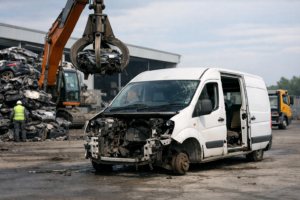
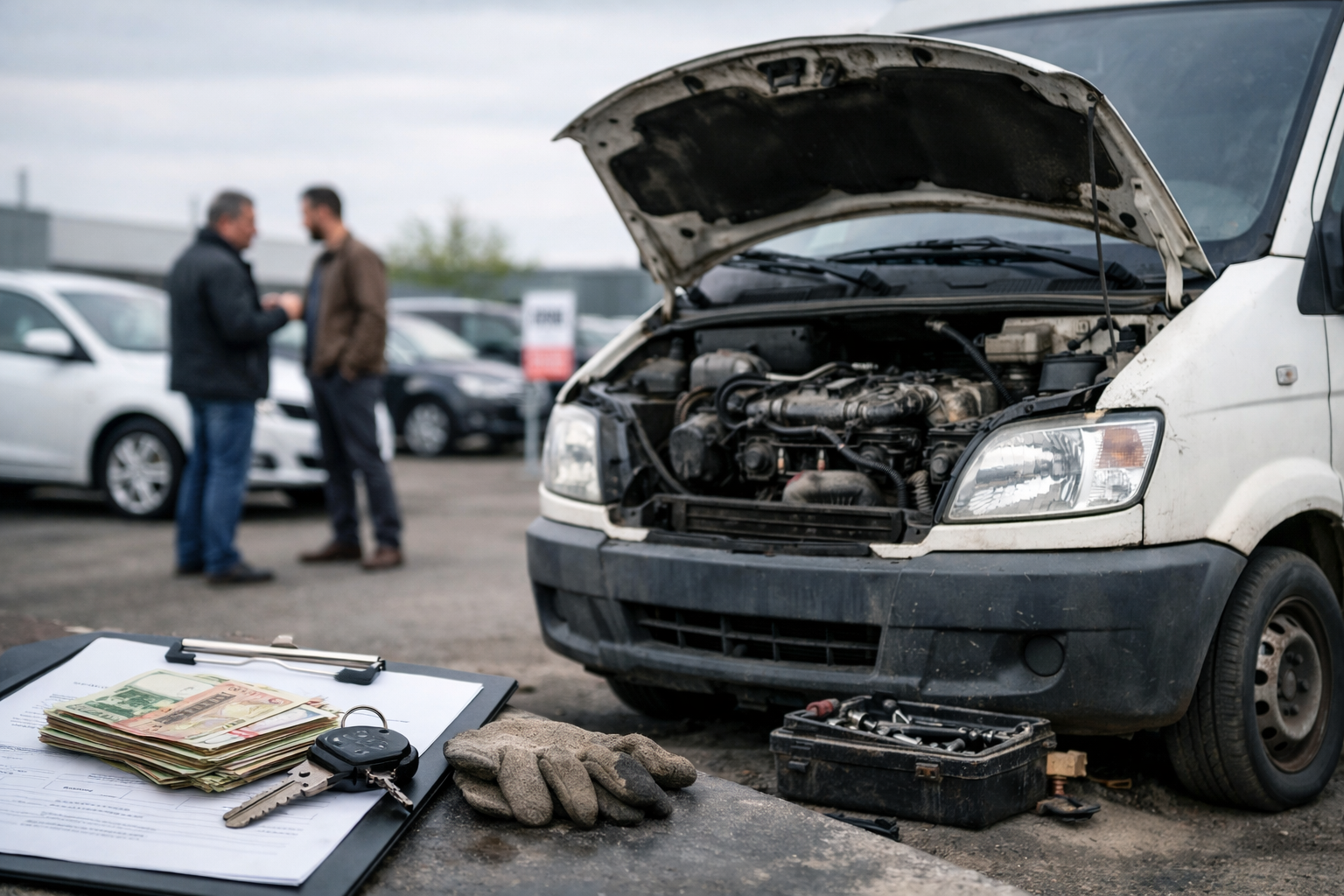
You can sell a van with a blown engine in the UK — and get real money for it. Specialist buyers purchase vans in this exact condition every day. What you receive depends on the van’s make, age, mileage, and whether the engine has seized completely or simply failed. This article explains exactly what to expect, step by step.
What Does “Selling a Van With a Blown Engine” Actually Mean?
Selling a van with a blown engine means transferring ownership of a van whose engine has suffered catastrophic, irreparable damage — or damage so costly to fix that repair makes no financial sense.
Think of it like a kettle with a burned-out element. The casing, the cord, the buttons — all fine. But the one part that makes it work is gone. The van is the same. The bodywork, tyres, gearbox, and cab may all be in decent shape. The engine, however, is finished.
This is different from selling a van that needs a new clutch, fresh brakes, or a timing belt. Those are repairable faults. A blown or seized engine is a terminal fault — and buyers treat it differently.
Technical Definition: What “Blown” and “Seized” Actually Mean
A blown engine typically refers to catastrophic internal failure — connecting rods punching through the block, a snapped crankshaft, or a head gasket failure so severe it has warped the cylinder head and contaminated the oil with coolant.
A seized engine — sometimes called a locked engine — means the internal moving parts have fused together, usually from oil starvation or extreme overheating. The engine physically cannot turn over. When you try to start it, nothing moves.
Both conditions render the engine beyond economical repair in most cases. Rebuilding a seized diesel van engine can cost anywhere from £2,000 to over £5,000 in parts and labour — often more than the van itself is worth on the open market.
Note
A van write-off engine situation is not always declared a total loss by insurers. If the van has no finance outstanding and you own it outright, you can sell it privately to a specialist buyer regardless of the engine condition.
How Buyers Value a Van With a Blown Engine
This is where most sellers get confused — and where most online content fails them. A blown engine does not make your van worthless. It makes it worth differently.
Specialist buyers and salvage traders look at several factors independently of the engine condition.
The van’s base value matters first. A 2019 Ford Transit with a seized engine is worth considerably more than a 2008 Transit in the same condition. The newer van has more usable parts, a higher scrap metal value, and potentially a repairable engine if the damage is isolated.
Parts value drives the offer. Buyers strip vans and resell components — doors, dashboards, axles, alternators, seats, wheels. A popular van model has a ready market for those parts. That demand is reflected in what you’re offered.
Scrap metal weight is the floor price. Every van has a minimum value based on its kerb weight and the current price of scrap steel. Even with van engine failure, you will always receive at least this amount. It varies with commodity prices but provides a genuine baseline.
The engine damage type affects the number. A seized engine that failed from oil starvation may still have salvageable ancillaries — the turbo, injectors, alternator. A blown engine where a rod has exited the block destroys more components. Buyers factor this in.
If you are unsure where to start, exploring your options through a service that specialises in selling a van in any mechanical condition will give you a realistic baseline offer without the guesswork.
Real-World Examples: What Sellers Actually Experience
Example 1: A Seized Ford Transit Custom (2017)
A sole trader’s Transit Custom seized on the motorway after an oil warning light was ignored. The engine locked solid. The van had 94,000 miles, a full service history, and good bodywork.
Because the Transit Custom is one of the most common vans on UK roads, parts demand is high. The seller received an offer well above basic scrap value — the doors, seats, dashboard, and running gear all had strong resale value to breakers.
Example 2: A Blown Engine on an Older Vauxhall Movano (2010)
A connecting rod failed catastrophically on a high-mileage Movano. The block was cracked. At 14 years old with 180,000 miles, the parts market was thinner.
The offer reflected that reality — closer to scrap weight value. But the seller still received a same-day cash offer and avoided paying for recovery and disposal separately. Broken engine van value in this case was modest but real and immediate.
Example 3: A Van Write-Off Engine Situation After Overheating (2021 Renault Trafic)
A small business owner’s Trafic overheated on a long run. The head gasket failed, coolant entered the cylinders, and the engine hydrolocked — a condition where incompressible liquid prevents the pistons from moving, often bending connecting rods.
The van was only three years old. Despite the terminal engine damage, the low mileage, clean interior, and near-new ancillary components meant the offer was substantially higher than scrap. Sell van engine seized situations on newer, low-mileage vans consistently return better values.
Common Misconceptions About Selling a Van With a Blown Engine
Misconception 1: “It’s only worth scrap metal price”
This is the most damaging belief a seller can hold — because it leads them to accept the first low offer they receive.
Scrap metal price is the floor, not the ceiling. A van with a blown engine still contains hundreds of pounds’ worth of reusable parts. Specialist buyers factor this in. Always get at least two or three quotes before accepting anything.
Misconception 2: “I need to fix it before I can sell it”
You do not. Specialist buyers purchase vans in non-running condition. They have their own recovery vehicles and do not expect you to deliver a working van. Attempting a repair before selling often costs more than the uplift in sale price — particularly with van engine failure where repair quotes routinely exceed the van’s value.
Misconception 3: “Dealers will buy it”
Main dealers and most used van traders will not touch a van with a seized or blown engine. They buy stock they can retail or part-exchange. A van engine seized beyond repair is not stock they can move. The right buyers are specialists — salvage traders, breakers, and dedicated broken-van buyers.
Warning
Be cautious of buyers who offer to “assess” the van before committing to a price, then reduce their offer significantly once they have it in their possession. Reputable buyers give a firm offer upfront based on the information you provide.
Why This Matters: The Practical Case for Acting Quickly
A van sitting on your driveway or yard with a blown engine is not a neutral situation. It is actively losing value.
Rubber seals dry out. Bodywork deteriorates without movement. If coolant has entered the engine, corrosion accelerates internally. A van that returns £800 today may return £600 in three months simply because it has been sitting.
There is also the practical burden. Recovery costs, storage space, road tax decisions — a non-running van creates ongoing friction. The van engine failure sell decision is almost always better made sooner.
The process with a specialist buyer is typically straightforward: provide the registration and engine fault details, receive an offer, agree a collection date, hand over the V5C logbook, and receive payment. Most transactions complete within 48 hours.
Summary
Key takeaways
- A blown or seized engine makes a van worth differently, not worthless — parts value and scrap weight create a real floor price
- Newer vans and popular models (Transit, Trafic, Transit Custom) return higher offers because parts demand is stronger
- You do not need to repair the van before selling — specialist buyers collect non-runners
- Main dealers will not buy a van with terminal engine damage; go directly to salvage specialists or dedicated broken-van buyers
- Act quickly — a stationary van with engine damage loses value through deterioration, and the sell van engine seized decision is almost always better made sooner rather than later
Frequently Asked Questions
How much will I get for a van with a blown engine in the UK?
The amount depends on the van’s make, age, mileage, and the extent of the engine damage. A newer, popular-model van in otherwise good condition can return several hundred to over a thousand pounds. An older, high-mileage van with widespread damage may return closer to scrap metal weight value. Always get multiple quotes.
Do I need the V5C logbook to sell a van with a blown engine?
Yes — you need the V5C (logbook) to legally transfer ownership. If you have lost it, you can apply for a replacement from the DVLA before selling. Selling without transferring the V5C correctly leaves you legally liable for the vehicle.
Will the buyer collect the van if it cannot be driven?
Reputable specialist buyers include collection in their service. They use flatbed recovery vehicles and do not expect you to deliver a non-running van. Confirm this is included before accepting any offer.
Does it matter why the engine blew?
It can affect the offer slightly. An engine that seized from oil starvation may have more salvageable ancillary components than one where a connecting rod has exited the block. Provide as much detail as you know — it helps buyers give you an accurate quote rather than a cautious low estimate.
Can I sell a van with a blown engine if it still has finance on it?
You must settle any outstanding finance before selling, or the buyer must handle the settlement as part of the transaction. Some specialist buyers will manage this process. Check the outstanding balance with your finance provider before approaching buyers.