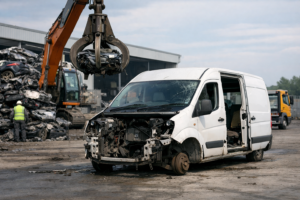
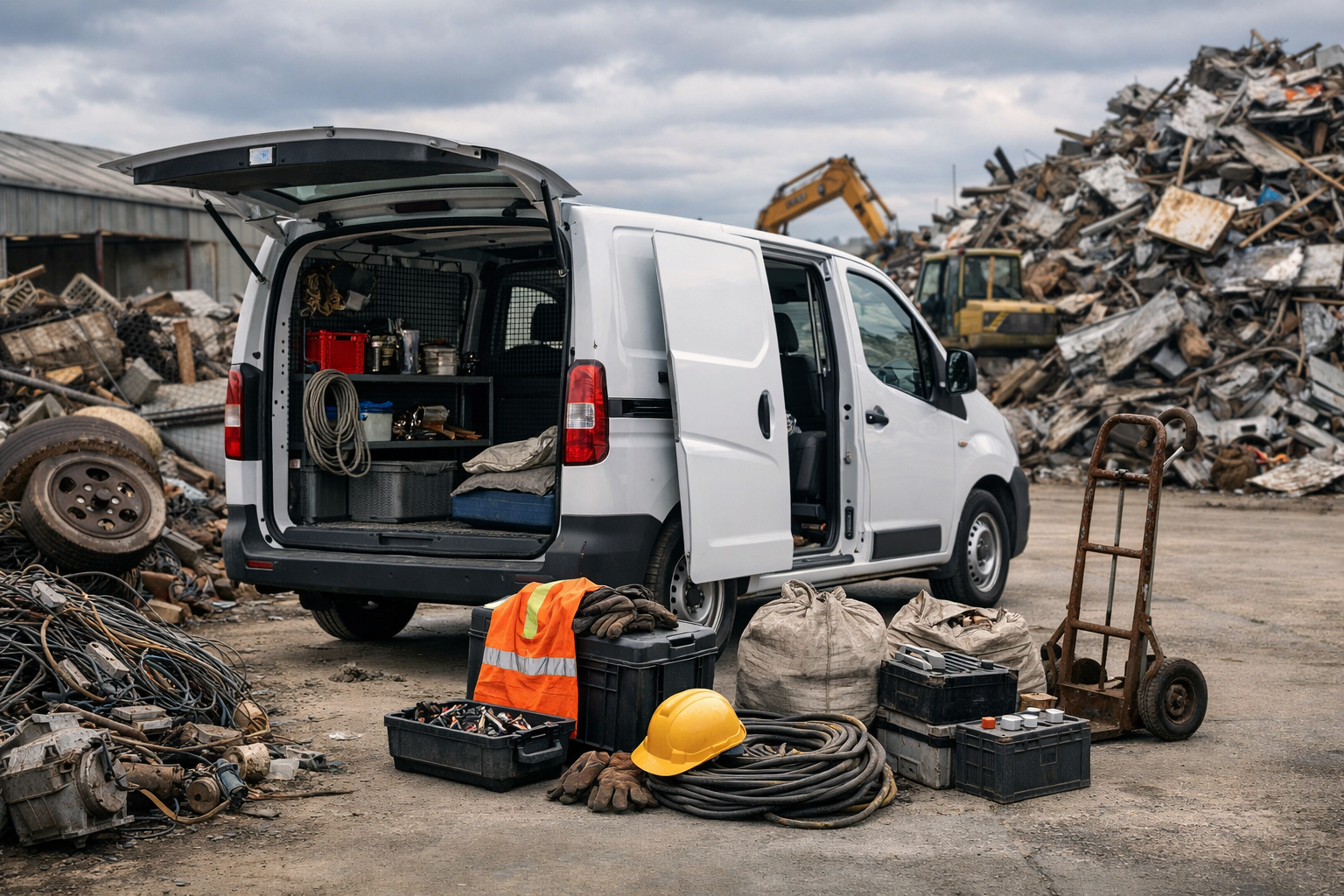
Preparing your van for scrap collection takes less than a day and protects you legally, financially, and personally. Follow these steps — removing documents, clearing personal data, draining fuel, and notifying the right authorities — and you’ll hand over your van with nothing left behind and nothing to worry about.
What you’ll need before you start
No specialist tools are required. Before you begin, have the following to hand:
- Your V5C logbook (vehicle registration document)
- A pen and access to the DVLA website (GOV.UK)
- A smartphone or laptop to log into accounts linked to your van’s number plate
- A bag for personal items
- A camera or phone to photograph the van’s condition before collection
Allow yourself two to three hours the day before collection. Rushing this process is where most people make costly mistakes.
Step-by-step: How to prepare your van for scrap collection
Remove all personal items from the van
Work through every compartment — cab, load area, overhead storage, door pockets, and under seats. Vans accumulate months of daily life: tools, invoices, PPE, clothing, chargers, and paperwork.
Paperwork left in a scrapped van can include your name, address, or business details. Once the van leaves your driveway, you have no way to retrieve it.
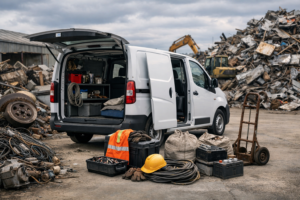
Pay particular attention to the load area. Trade vans often have tools, fixings, or equipment stored loosely in the back. These have real value and are easy to overlook when you’re focused on the cab.
Use a van scrap collection checklist to tick off each storage area as you clear it. A simple handwritten list prevents the “I’m sure I got everything” regret that hits the next morning.
Wipe personal data from the sat-nav
This is the step almost every competitor guide skips — and it’s one of the most important.
Built-in sat-navs store your home address, workplace, frequent destinations, and often your contact list if the van was paired with a phone via Bluetooth. A scrapped van passes through multiple hands before it’s crushed. Any data stored in the system goes with it.
Factory-reset the sat-nav before collection. On most units, this is found under Settings > System > Reset or similar. If you’re unsure, search your sat-nav model followed by “factory reset” — the process takes under two minutes. Do the same for any portable sat-nav you leave mounted in the van (better still, take it with you).
While you’re at it, delete any paired Bluetooth devices from the van’s infotainment system. Your phone’s name and connection history are stored there too.
Deal with fuel in the tank
Scrap yards pay for the van — not the diesel or petrol inside it. Fuel left in the tank is value you’re giving away for free.
If your van still runs, drive it in the days before collection to use the fuel down naturally. If it doesn’t run, a fuel transfer pump (available from most motor factors for under £20) lets you siphon the remaining fuel into a jerry can. Store and use it in another vehicle.
Leaving fuel in the tank is not a safety issue that will prevent collection, but it is money left on the table. Even a quarter tank of diesel has real value.
Cancel or transfer toll and congestion-charge accounts linked to the plate
This is the most overlooked item on any van scrap collection checklist, and it can cost you money long after the van is gone.
If your van is registered with the London Congestion Charge, ULEZ, Dart Charge (Dartford Crossing), or any other toll scheme, those accounts are tied to your number plate. The moment a new plate is assigned to a different vehicle — or if the scrap yard moves the van under its own power — charges can accrue against your account.
Log into each account and either remove the vehicle or close the account entirely before collection day. Keep a screenshot as proof. This takes ten minutes and prevents a surprise invoice weeks later.
If you have a Direct Debit set up for any toll account, cancelling the vehicle from the account does not automatically cancel the Direct Debit. Check your bank statement the following month.
Cancel your insurance on the correct day
Cancel your van insurance after collection — not before.
If you cancel before the scrapper arrives and collection is delayed by even a day, you have an uninsured vehicle on the road (if it’s driveable) or on a public road (if parked there). Either situation carries legal risk.
The moment the scrap collector takes the van, call your insurer. Most policies allow mid-term cancellation with a partial refund. Have your policy number ready and confirm the exact cancellation date matches the collection date.
Take a photo of the van being loaded onto the collection vehicle. This gives you a timestamped record of exactly when ownership passed — useful if any dispute arises with your insurer or the DVLA.
Notify the DVLA and get your Certificate of Destruction
This is not optional — it is a legal requirement.
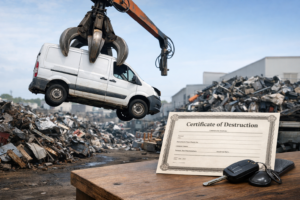
When you hand your van to an Authorised Treatment Facility (ATF) — a licensed scrap yard — they are legally required to issue you a Certificate of Destruction (CoD) within seven days. This document proves the vehicle has been scrapped and removes your liability for it. Keep it permanently.
You must also tell the DVLA the vehicle has been scrapped. Hand the yellow “sell, transfer or part-exchange your vehicle” section of the V5C to the ATF. Send the rest of the V5C to the DVLA yourself. Do not hand over the entire logbook — the green section is yours to retain until the CoD arrives.
If you want to understand what happens to your van after you hand it over, or you’re comparing collection services, the van scrapping process explained on We Buy Broken Vans covers what a reputable collector should offer and how the process works end to end.
If you hand your van to a non-licensed collector, you may never receive a CoD. Without it, you remain the registered keeper and are liable for anything that happens to the vehicle — including road tax, fines, and accidents.
Do a final walk-around and photograph the van
Before the collector arrives, do one last check. Photograph the van’s exterior and interior. Note any damage, missing parts, or condition issues.
This protects you if a dispute arises about the van’s condition at collection — some collectors will attempt to renegotiate the price on arrival if they claim the van is in worse condition than described. Your photos are your evidence.
Check the roof, the rear doors, and the underside of the load area. These are spots that get missed in a quick walk-around.
Troubleshooting: Common mistakes people make
Handing over the entire V5C logbook. Keep the main green section. Only the yellow slip goes to the ATF. Send the green section to the DVLA separately.
Cancelling insurance before collection. Wait until the van has physically left. Even a one-day gap creates legal exposure.
Assuming the sat-nav is empty. It isn’t. Factory reset it. This takes two minutes and protects months of location history.
Forgetting about toll accounts. Dartford Crossing, Congestion Charge, and ULEZ accounts don’t cancel themselves when a van is scrapped. Log in and remove the plate manually.
Not getting a Certificate of Destruction. If your collector can’t or won’t provide one, they are not an ATF. Find a licensed alternative.
Leaving tools in the load area. A van full of trade tools can represent hundreds of pounds of equipment. Clear the back completely, not just the cab.
Frequently Asked Questions
What should I remove before scrapping my van?
Remove all personal items, documents, tools, and equipment. Factory-reset the sat-nav and any infotainment system paired with your phone. Take your V5C logbook and only hand the yellow section to the collector.
Can I scrap a van without the V5C logbook?
Yes, but it complicates the process. Inform the DVLA the logbook is lost before collection. A reputable ATF will still accept the van, but you should request written confirmation of the transaction and ensure you receive a Certificate of Destruction.
How much fuel should I leave in the van?
As little as possible. Use it up before collection or siphon it out. The scrap yard keeps whatever is in the tank — it is not factored into your payout.
Do I need to tell my insurance company I'm scrapping the van?
Yes. Cancel your policy on the day of collection — not before. Most insurers will issue a partial refund for the unused portion of your premium.
What is a Certificate of Destruction and why does it matter?
A Certificate of Destruction (CoD) is a legal document issued by an Authorised Treatment Facility confirming your vehicle has been scrapped. Without it, you remain the registered keeper and are liable for any fines, charges, or incidents involving the vehicle after it has left your hands. Keep it indefinitely.
How do I remove my van from congestion charge and toll accounts?
Log into each account directly — Transport for London for the Congestion Charge and ULEZ, National Highways for Dart Charge. Remove the vehicle registration from the account. Do not rely on the scrap yard to do this on your behalf.
- Clear every compartment of personal items, tools, and documents before the collector arrives
- Factory-reset the sat-nav and delete paired Bluetooth devices — this is the step most guides miss
- Cancel toll and congestion-charge accounts linked to the plate before collection day
- Cancel insurance after collection, not before
- Only hand the yellow V5C slip to the ATF — send the green section to the DVLA yourself and keep the Certificate of Destruction permanently