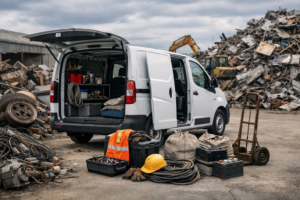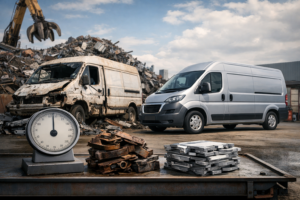
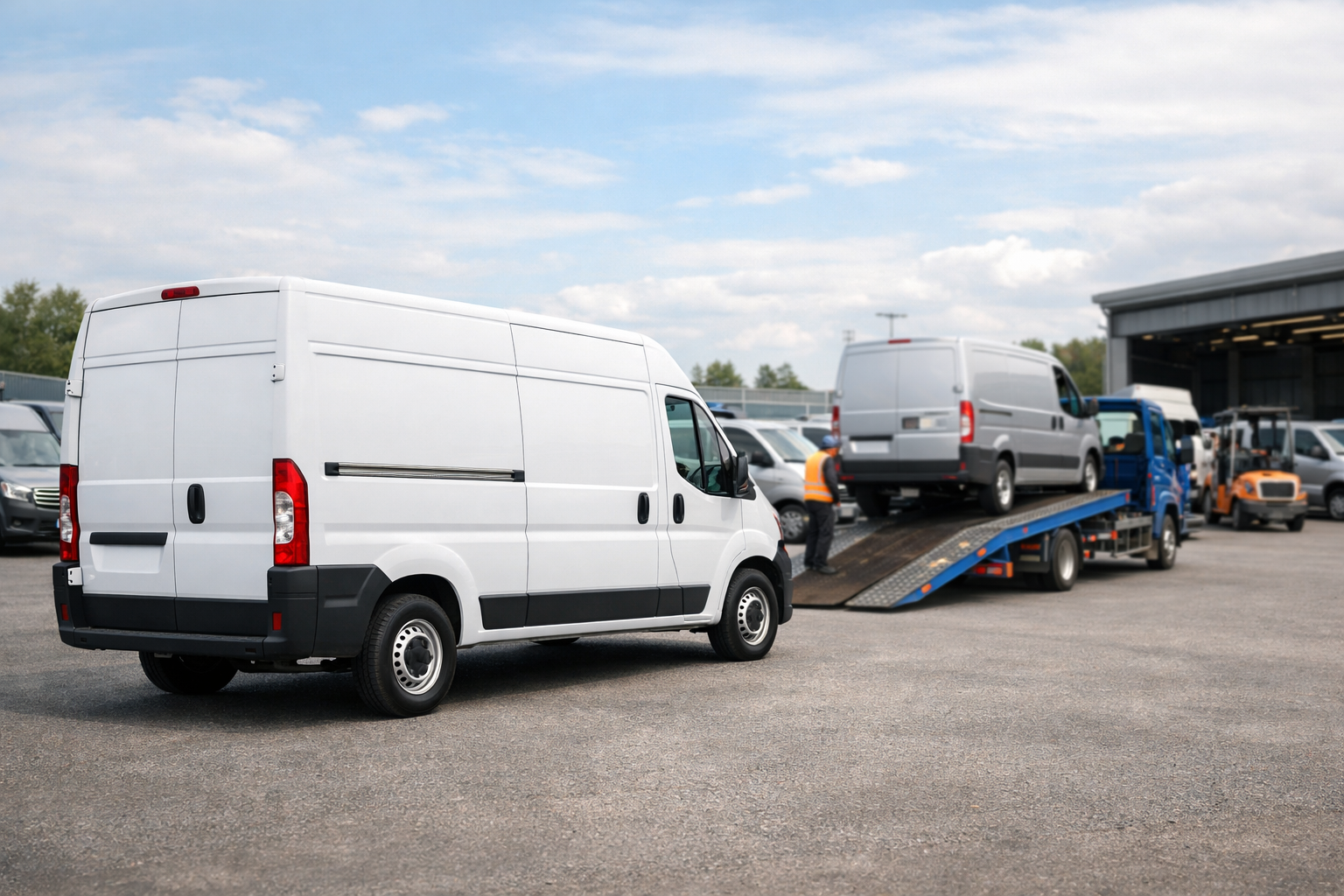
Here’s what happens to a van after it’s sold to a buyer like us: it gets assessed, then it either goes back on the road, gets stripped for parts, or gets recycled — usually within days. There’s no mystery, no dark van graveyard, no sinister warehouse full of Transit vans stacked to the ceiling. It’s actually quite sensible. Almost disappointingly so.
Most people, it turns out, are curious about this. They’ve spent years with a van — possibly their entire working life — and then they hand over the keys and wonder what on earth happens next. Which is a completely reasonable thing to wonder, and yet almost nobody in this industry bothers to explain it. We will.
Key takeaways
- After purchase, every van is assessed within days to determine its best possible use
- Vans in reasonable condition are repaired and resold; the UK used van market is enormous and demand is constant
- Vans beyond economical repair are stripped for parts or sent through the van recycling UK infrastructure — nothing useful goes to waste
- The van buyer process UK-side is faster and more organised than most sellers expect
- Knowing what happens to your van after sale isn’t just satisfying — it tells you a lot about whether the buyer is reputable
So What Actually Happens the Moment We Drive Away?
The van goes straight into assessment. Not a vague, hand-wavy “we’ll have a look” assessment — a proper, systematic evaluation of what the vehicle is worth in its current state and what it could be worth with varying degrees of work.
Think of it as triage. A doctor doesn’t look at a patient and immediately reach for the most dramatic option. They assess. They prioritise. They figure out the most sensible path forward. We do exactly the same thing with vans, except with less paperwork and nobody crying in the waiting room.
The assessment covers the engine condition, the bodywork, the mileage, the service history (if there is one — and there often isn’t, which is fine), and the general mechanical state. All of this determines which of three paths the van takes next.
Path One: Back on the Road — Van Resale After Purchase
The best outcome for everyone — including the van, if vans have feelings, which they don’t, but stay with me — is that it gets repaired and resold. This happens more often than you’d think.
A van that’s been written off by its owner as “broken” is frequently nothing of the sort. It has a specific fault. Maybe the engine’s misfiring. Maybe the gearbox is grumbling. Maybe the bodywork looks like it’s been used as a crash barrier (it has been used as a crash barrier). These are fixable things. Expensive things, sometimes, which is why the original owner didn’t fix them — but fixable.
Once repaired to a roadworthy standard, the van enters the used vehicle market. The UK used van market is substantial: hundreds of thousands of light commercial vehicles change hands every year, and demand from tradespeople, small businesses, and delivery operators is essentially constant. A repaired Transit or Sprinter or Vivaro doesn’t sit around gathering dust. It gets bought.
Pro tip
If your van is broken but not catastrophically so, this is likely its fate — which means you’re not sending it to the crusher. You’re sending it to someone who can be bothered to fix it.
Path Two: Stripped for Parts — The Surprisingly Valuable Van
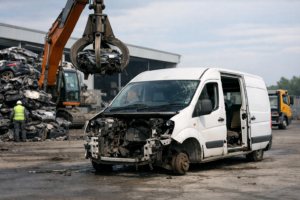
Here’s something that surprises people: a van that is genuinely beyond economical repair can still be worth a remarkable amount of money. Not as a van. As a collection of components that happen to be attached to each other.
Door panels. Seats. Mirrors. Alternators. Starter motors. Gearboxes. Dashboards. Catalytic converters (which are worth more than you’d expect and less than thieves think, but that’s a different article). All of these have a second life as spare parts for other vans of the same make and model.
The UK has a thriving network of dismantlers and salvage specialists who buy vehicles specifically for this purpose. A van that cost £15,000 new might yield £3,000–£5,000 in parts — spread across dozens of buyers who needed exactly that specific component for their specific vehicle. It’s efficient. It’s economical. It keeps older vans on the road longer, which is arguably better for the environment than manufacturing new parts.
If you’re wondering what to do with a van in this state, selling it to a specialist buyer who understands the van disposal process is almost always the fastest and least painful route — because they already have the infrastructure to handle exactly this outcome.
Path Three: Van Recycling UK — The Responsible End of the Road
Sometimes a van is genuinely done. The structure is compromised. The mileage is astronomical. The parts are too worn or too vehicle-specific to be useful to anyone. In this case, the van goes to an Authorised Treatment Facility — an ATF, which is the official term for a licensed vehicle recycler in the UK.
ATFs are regulated under the End of Life Vehicles (ELV) Regulations 2003, which is a piece of legislation that sounds crushingly dull but actually matters quite a lot. It means that vehicle recycling in the UK isn’t just “put it in a crusher and hope for the best.” There’s a process.
That process looks roughly like this:
- Depollution first: Fluids are drained and safely disposed of — engine oil, coolant, brake fluid, fuel, air conditioning refrigerant. These are all hazardous if they end up in the ground. They don’t.
- Hazardous components removed: Batteries, airbags, and other components with specific disposal requirements are taken out before anything else happens.
- Parts harvested: Anything still usable comes off before the shell goes any further.
- The shell is shredded: What’s left — the steel body — goes into a shredder. The resulting metal is sorted and sold as scrap. Steel is one of the most recycled materials on earth; it doesn’t stop being useful just because it used to be a Volkswagen Crafter.
Note
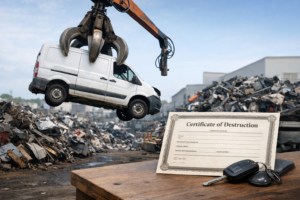
A Certificate of Destruction is issued when a vehicle goes through an ATF. This is important — it formally removes the vehicle from the DVLA register, so you’re no longer liable for it. Always confirm this happens.
The UK vehicle recycling sector processes around two million vehicles a year. The recycling rate for end-of-life vehicles under ELV regulations is required to be at least 95% by weight. In practice, very little of a modern van actually ends up as waste.
Why Does Any of This Matter to You?
Because it tells you something about who you’re selling to.
A buyer who can clearly explain what happens to a van after it’s sold — who has actual downstream processes for resale, parts, and recycling — is a buyer who is operating a real, organised business. They’re not a bloke with a trailer and a vague plan. They have relationships with repairers, dismantlers, and licensed recyclers. They’ve done this before. Many, many times.
The van buyer process UK-wide varies enormously in quality. Some buyers are professional and transparent. Others are, to put it diplomatically, making it up as they go. The ones who can tell you exactly what happens next are the ones worth dealing with.
It also matters because — and this is the bit nobody says out loud — some people feel a bit guilty about getting rid of a van that’s served them well. Knowing it’s going to be repaired and resold, or stripped for parts that keep other vehicles running, or properly recycled rather than dumped in a field somewhere, is genuinely reassuring. You’re not abandoning it. You’re passing it on to people who know what to do with it.
Frequently Asked Questions
How long does it take for a van to be processed after it’s bought?
Assessment typically begins within a day or two of collection. The full process — whether that’s repair, dismantling, or recycling — depends on what the van needs, but most vehicles are well into their next chapter within a week of sale. It’s not a slow process. Sitting on stock costs money; nobody has an incentive to hang around.
Will I get a Certificate of Destruction if my van is recycled?
Yes — if your van goes to an Authorised Treatment Facility, a Certificate of Destruction is issued and the vehicle is removed from the DVLA register. You should receive confirmation of this. If a buyer can’t tell you whether this will happen, that’s a red flag worth paying attention to.
Can I find out what specifically happened to my van after selling it?
In most cases, no — and that’s not evasion, it’s just logistics. Once a van moves through the downstream process (resale, dismantling, recycling), tracking individual vehicles isn’t how the system works. What you can know is the process your buyer uses, which is why asking upfront is worth doing.
What if my van still has personal items or tools in it?
Remove them before collection. This sounds obvious, but it’s remarkable how often it isn’t done. Once a van is collected and enters the assessment process, recovering items from it becomes complicated at best and impossible at worst. Check under the seats. Check the load area. Check the cab door pockets. Do it twice.
Does van recycling UK actually recycle most of the vehicle, or is that just marketing?
It’s not marketing — it’s a legal requirement. The End of Life Vehicles Regulations require that 95% of a vehicle’s weight is recovered or recycled. Modern vans are predominantly steel, which is highly recyclable. The recycling rate is genuine, not aspirational.
What happens to a van’s number plates after it’s sold?
The registration number stays with the vehicle unless the previous owner has specifically retained it through the DVLA’s personalised registration process. If you want to keep your plates, you need to arrange that before the sale completes — not after, when the vehicle has already changed hands.
If you’ve got a van that’s broken, written-off, or simply more trouble than it’s worth — and you’d like to know it’s going somewhere sensible rather than into a bureaucratic void — we’re the straightforward option. No nonsense, no lowball surprises, no vague promises about what happens next. Just a fair price and a clear process, from collection to whatever comes after.