In the UK in 2025, scrapping a van typically pays out between £150 and £600, depending on the van’s size, weight, condition and the current price of scrap steel. Larger vans like the Ford Transit or Mercedes Sprinter sit at the higher end; smaller vans like the Vauxhall Combo sit at the lower end. The exact number is never arbitrary — it follows a real calculation that most scrap dealers never bother to explain.
That calculation is what this guide unpacks.
What Is the Average Scrap Value of a Van in the UK?
Scrap value is set by weight, not by make or model. Scrap yards buy metal by the tonne, so the heavier your van, the more you receive. Think of it like selling apples at a market — the price per kilo is fixed by the market that day, and what you earn depends entirely on how many kilos you bring.
In 2025, ferrous scrap metal (the steel and iron that makes up most of a van’s body and chassis) trades at roughly £130 to £200 per tonne at UK scrap yards, though this fluctuates with global steel markets. A typical van weighs between 1.2 and 2.5 tonnes, which is why scrap van payouts land where they do.
Here is how that translates by van size:
- Small vans (e.g. Vauxhall Combo, Ford Transit Connect) — kerb weight roughly 1.2–1.5 tonnes — typical scrap van payout: £150–£250
- Medium vans (e.g. Ford Transit Custom, VW Transporter) — kerb weight roughly 1.7–2.0 tonnes — typical payout: £250–£380
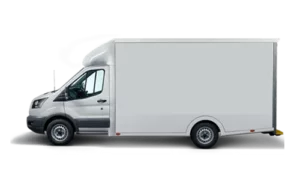
- Large vans (e.g. Ford Transit, Mercedes Sprinter, Iveco Daily) — kerb weight roughly 2.0–2.5 tonnes — typical payout: £350–£600
Vans consistently return more than cars at the scrap yard because they carry more metal. A family hatchback might weigh 1.1–1.3 tonnes; a Transit tips the scales at twice that. More weight means a higher scrap van value UK owners can realistically expect.
What Factors Affect How Much You Get for Scrapping a Van?
Weight is the biggest lever, but it is not the only one. Several variables combine to set the final offer you receive.
Current scrap metal prices move with global steel demand. When Chinese steel mills ramp up production, demand for raw scrap rises and UK prices follow. When construction slows globally, prices dip. The van price per tonne you are quoted today may be 10–15% different from next month’s figure.
Van condition affects the offer in two ways. A running van is easier to handle at the yard, so some facilities offer a small premium. Fire-damaged or flood-damaged vans may have corroded or contaminated metal that reduces yield, which can lower the offer slightly.
Age and make matter less than people assume at the scrap stage — a 2005 Transit and a 2015 Transit both contain steel. However, newer vans may have more recoverable parts (catalytic converters, intact engines, modern gearboxes) that add separate value on top of the base metal price.
Location plays a quiet role. Scrap yards in areas with high competition or close to major ports (where metal is exported) tend to offer slightly better rates than rural yards with fewer alternatives.
Fuel type is increasingly relevant. Diesel and petrol vans are straightforward. Electric vans carry large lithium-ion battery packs that require specialist disposal — this can reduce the net scrap van payout because the yard incurs additional handling costs.
Salvageable parts can lift your return significantly. A catalytic converter alone can be worth £50–£300 depending on the metal content. If the engine or gearbox is in good condition, a breaker’s yard may offer more than a straight scrap deal.
Scrap Van Prices by Van Type: A Practical Breakdown
Use these figures as a realistic starting point, not a guarantee. Actual offers vary with live steel prices and yard location.
Small vans (Vauxhall Combo, Ford Transit Connect, Citroën Berlingo) typically weigh 1,200–1,500 kg. At £150 per tonne, that produces a base metal value of £180–£225. After yard margins, expect a scrap van payout in the £150–£250 range.
Medium vans (Ford Transit Custom, VW Transporter, Mercedes Vito) weigh roughly 1,700–2,000 kg. Base metal value at £160 per tonne sits at £272–£320. Real-world offers typically land at £250–£380.
Large vans (Ford Transit, Mercedes Sprinter, Iveco Daily) weigh 2,000–2,500 kg or more. At £170 per tonne, base metal value reaches £340–£425. With a recoverable catalytic converter or other parts, total payouts can reach £400–£600+.
Minibuses and high-roof panel vans with kerb weights above 2.5 tonnes can occasionally attract offers above £600, particularly when steel prices are elevated.
Electric vans are a special case. The battery adds weight but also disposal cost. Some facilities deduct a battery handling fee; others factor it into a lower per-tonne rate. Always ask explicitly how the battery is treated in the quote.
How to Get the Best Price When Scrapping Your Van
Getting the best scrap van value UK owners can access comes down to three habits: compare, prepare and time.
Always get at least three quotes. Scrap yard pricing is not regulated, so offers for the same van can vary by £50–£100 between facilities. Spend twenty minutes ringing around — it is the highest-return use of your time.
If you want a straightforward, no-obligation quote from a buyer who handles the full process, you can get your van valued for scrap through We Buy Broken Vans without having to chase multiple yards yourself.
Use the DVLA’s ATF checker to confirm any scrapper you use is an Authorised Treatment Facility (ATF) — a licensed facility regulated under the End of Life Vehicles Regulations. Using an unlicensed dealer is illegal and leaves you exposed to liability if the van is not properly destroyed.
Remove valuable aftermarket parts before the van is collected. Roof racks, tow bars, racking and shelving are not factored into the scrap price — take them off and sell them separately. Check whether the catalytic converter is worth removing and selling to a specialist buyer rather than leaving it for the yard.
Avoid cash-in-hand offers. Payment for scrap vehicles must be made by bank transfer under UK law. Any dealer offering cash is operating illegally, and if something goes wrong — including the van not being properly scrapped — you have no protection.
Pro tip
Steel prices tend to firm up in periods of strong global construction activity and weaken during slowdowns. Tracking the British Metals Recycling Association (BMRA) price indices or Metal Bulletin’s ferrous scrap data takes five minutes and can tell you whether prices are trending up or down. Waiting for a stronger market cycle can add 10–20% to your van scrap price per tonne — on a two-tonne Transit, that is a real difference of £50–£80 in your pocket.
The Legal Process for Scrapping a Van in the UK
Scrapping a van is not simply a case of handing over the keys. There is a short but mandatory legal process, and skipping any step creates problems later.
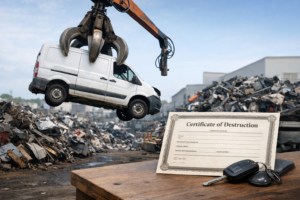
You must use an ATF. Only Authorised Treatment Facilities are legally permitted to issue a Certificate of Destruction (CoD) — the document that formally ends the van’s registered life. Without a CoD, the DVLA still considers you responsible for the vehicle.
The Certificate of Destruction is issued by the ATF, usually within a few days of the van being scrapped. Keep a copy. It is your proof that the vehicle was legally destroyed and protects you if a fine or enforcement notice is later issued against the van’s registration.
Notify the DVLA. You can do this online at GOV.UK. Hand the V5C logbook (the registration document) to the ATF on collection day — they handle the DVLA notification as part of the process. If you do not, you may continue to receive road tax reminders or be held liable for any incidents involving the registration.
Outstanding finance is a serious issue. If your van is on hire purchase or a lease agreement, the finance company legally owns the vehicle. Scrapping it without settling the finance or obtaining the lender’s written permission is a criminal offence. Settle the debt or contact the lender first.
Scrapping a van not in your name requires proof that you are authorised to dispose of it — a letter of authority from the registered keeper at minimum. ATFs are required to check this.
SORN (Statutory Off Road Notification) is worth considering if there is a gap between stopping using the van and it being collected. A SORN stops road tax liability accruing on a vehicle that is no longer on the road.
Scrap Van Collection: What to Expect on the Day
Most reputable ATFs and specialist van scrap buyers offer free collection, but read the terms. Free collection is typically included when the van is within a reasonable distance of the facility and the scrap value justifies the transport cost. For very remote locations or very small vans with low metal value, a collection fee may be deducted from the payout.
Documents to have ready: The V5C logbook is the critical document. Hand it to the driver on collection. If you have lost it, inform the ATF in advance — some will still proceed, but you will need to notify the DVLA separately using a V62 form.
Payment must be made by bank transfer. This is a legal requirement under the Scrap Metal Dealers Act 2013. Expect payment within one to three working days of collection, though some buyers pay on the same day.
Timeline from booking to CoD: Collection is typically arranged within one to five working days of accepting a quote. The Certificate of Destruction usually arrives within seven days of the van being processed at the ATF.
What happens to the van: The ATF first depollutes the vehicle — draining fluids, removing the battery and catalytic converter, and extracting hazardous materials. The shell is then crushed and shredded, with the resulting metal sorted and sold to steel mills for recycling. Around 80% of a typical van is recoverable material.
Scrapping vs. Selling: Is Scrapping Your Van the Right Choice?
Scrapping makes the most sense when the cost of repair, MOT or ongoing maintenance exceeds what you could realistically sell the van for. A van with a seized engine, a failed MOT it cannot economically pass, or structural corrosion has a trade value close to — or below — its scrap value.
Scrap value acts as a price floor. If you are considering a private sale, knowing your scrap van payout tells you the minimum you should accept. No private buyer should pay less than a scrap yard would — and if they are offering close to scrap price, a licensed scrapper is the safer, simpler route.
Salvage value sits between scrap and trade value. A van that runs but has cosmetic damage or high mileage may attract a breaker’s yard offer above the base metal price, because the parts are still usable. Get both a scrap quote and a salvage quote before deciding.
The hidden cost of keeping an old van running is often underestimated. Road tax, insurance, MOT preparation costs and repair bills on an unreliable vehicle can easily exceed £1,500–£2,500 a year. Against that, a scrap payout of £300–£500 now — plus the freedom to move on — is often the rational choice.
Current UK Scrap Metal Prices and How They Impact Your Payout
This is the angle most guides ignore entirely, and it is the one that can make a meaningful difference to what lands in your account.
Ferrous scrap metal prices in the UK are not fixed. They are set by a combination of domestic supply (how much scrap is available), export demand (particularly from steel mills in Turkey, India and China), and energy costs at UK steel plants. Prices are published weekly by the British Metals Recycling Association and tracked in real time by industry sources including Metal Bulletin (now Fastmarkets).
Why does this matter to you? Because the van price per tonne a yard quotes you today is directly tied to where the market sits that week. In a strong market, you might be quoted £180–£200 per tonne. In a weak market, the same yard might offer £130–£140 per tonne. On a 2.2-tonne Transit, that gap is £110 — not trivial.
How to use this information practically: Check the BMRA’s published price direction (rising, stable or falling) before accepting a quote. If prices are trending upward, waiting two to four weeks may improve your offer. If prices are at a seasonal high or showing signs of softening, accepting the current quote is the smarter move.
Warning
Do not wait indefinitely chasing a market peak. A van sitting unused still incurs insurance costs, and if it is not SORNed, road tax too. The goal is to make an informed decision, not to speculate on metal markets.
Global demand cycles — particularly Chinese infrastructure spending — have historically driven UK ferrous scrap prices up in Q1 and Q3 of strong economic years. This is not a guarantee, but it is a pattern worth knowing if you have flexibility on timing.
Key takeaways
- Scrap van value in the UK is calculated by weight multiplied by the current price per tonne of ferrous scrap metal — typically producing payouts of £150–£600 depending on van size.
- The biggest variables are van weight, live steel prices, condition and whether salvageable parts (especially the catalytic converter) add separate value.
- You must use a licensed ATF, receive a Certificate of Destruction and notify the DVLA — skipping these steps creates legal liability.
- Payment must be by bank transfer; cash-in-hand scrap deals are illegal under the Scrap Metal Dealers Act 2013.
- Tracking live ferrous scrap price indices (BMRA, Fastmarkets) before accepting a quote can increase your payout by 10–20% — a genuine, actionable edge that most van owners never use.
Common Misconceptions About Scrapping a Van
“The make and model sets the scrap price.” It does not. A Transit and a Sprinter of similar weight will return similar scrap offers. The metal content — not the badge — is what the yard is buying.
“Running vans are worth much more than non-running vans at scrap.” The difference is smaller than most people expect. A non-running van may attract a marginally lower offer to account for handling, but the base metal value is identical. The scrap price is not an MOT result.
“I can get more by selling the catalytic converter separately and then scrapping the rest.” Sometimes true, but check first. Some ATFs factor the catalytic converter into their overall offer. Removing it without telling the yard, then presenting a stripped van, can result in a lower total offer than leaving it in place. Always ask the yard how they value the cat before making a decision.
Frequently Asked Questions
How much is a Ford Transit worth for scrap in the UK?
A Ford Transit in standard configuration weighs roughly 2.0–2.5 tonnes depending on the variant. At current UK ferrous scrap prices, expect a scrap payout in the region of £300–£500, with the higher end achievable when steel prices are strong and the catalytic converter is intact.
Do I get more money for scrapping a van than a car?
Yes, in most cases. Vans weigh significantly more than cars — often twice as much — and since scrap value is calculated by weight, a van produces a higher payout. A large van can return two to three times the scrap value of an average family car.
Can I scrap a van without a V5C logbook?
Some ATFs will proceed without a V5C, but you must notify the DVLA separately using a V62 form, and you should inform the ATF in advance. Without the logbook, proving ownership can be more complicated, and some facilities will decline the job. If you have lost your V5C, apply for a replacement from the DVLA before arranging collection where possible.
How long does it take to get paid when scrapping a van?
Most reputable buyers pay within one to three working days of collection, by bank transfer. Some pay on the same day the van is collected. If a buyer cannot confirm a payment timeline before collection, treat that as a warning sign.
Is it legal to scrap a van for cash?
No. The Scrap Metal Dealers Act 2013 prohibits cash payment for scrap vehicles. Payment must be made by bank transfer. Any dealer offering cash is operating illegally, and using them leaves you with no legal protection if the van is not properly destroyed.
What is a Certificate of Destruction and do I need one?
A Certificate of Destruction (CoD) is a legal document issued by an Authorised Treatment Facility confirming that your van has been formally destroyed and removed from the DVLA register. You do need one. Without it, the DVLA continues to hold you responsible for the vehicle, and you remain liable for any fines or enforcement notices issued against the registration.
Can I scrap a van that still has finance on it?
Not without resolving the finance first. If the van is on hire purchase or a lease agreement, the finance company is the legal owner. Scrapping the vehicle without their written permission is a criminal offence. Contact your lender, settle the outstanding balance or obtain written authorisation before proceeding.
Will the scrapper collect my van for free?
Most reputable ATFs and specialist buyers offer free collection, provided the van is within a reasonable distance and the scrap value covers the transport cost. For very remote locations or low-value small vans, a collection fee may be deducted from the payout. Always confirm the collection terms before agreeing to a quote.
Does a non-running van get less scrap value?
Marginally, in some cases. The base metal value of a non-running van is identical to a running one of the same weight. Some yards apply a small handling adjustment for vans that cannot be driven onto a transporter. The difference is rarely more than £20–£40 and should not deter you from scrapping a van that will not start.
How do I notify the DVLA after scrapping my van?
Hand your V5C logbook to the ATF on collection day. The ATF is legally required to notify the DVLA on your behalf as part of the end-of-life vehicle process. You will then receive a refund for any remaining full months of road tax. You can also notify the DVLA directly online at GOV.UK if you want to confirm the notification has been processed.