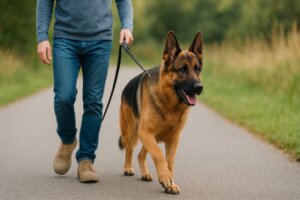
How To Train a German Shepherd to Loose Lead Walk: The Complete Guide
Does your German Shepherd turn every walk into a full-body workout — for you? You’re not alone. Learning how to train a German Shepherd to loose lead walk is one of the most searched topics among GSD owners, and for good reason. These intelligent, powerful dogs can pull with remarkable force, turning a peaceful evening stroll into a tug-of-war match. The good news? With the right approach, consistent practice, and a little patience, your German Shepherd can become a reliable, calm walking companion you’re proud to take anywhere.
Why Loose Lead Walking Matters for German Shepherds
German Shepherds are working dogs at heart. Bred for herding, protection, and police work, they’re naturally energetic, alert, and driven. According to the American Kennel Club, German Shepherds rank as the 3rd most popular dog breed in the United States — and one of the top breeds that owners seek professional training help for.
Pulling on a leash isn’t just frustrating — it can be genuinely dangerous. A full-grown GSD can weigh between 50–90 pounds, and that momentum can cause:
- Shoulder or wrist injuries in handlers
- Tracheal and cervical damage in dogs using standard collars
- Increased reactivity when the dog constantly reaches ahead of the owner
Teaching your GSD to walk calmly by your side builds trust, reinforces your leadership, and makes exercise genuinely enjoyable for both of you.
What You’ll Need Before You Start
Before diving into training, set yourself up for success with the right tools and mindset.
Recommended Equipment
- Front-clip harness – Redirects pulling without causing discomfort
- Standard 4–6 foot leash – Avoid retractable leashes during training
- High-value treats – Small, soft training treats your dog goes wild for
- Clicker (optional) – Excellent for marking the exact moment of good behavior
- Patience – Non-negotiable
> “A well-trained dog is a happy dog. Consistency and positive reinforcement are the cornerstones of any innovative training program.” — Dr. Ian Dunbar, Veterinary Behaviorist and founder of the Association of Pet Dog Trainers
Step-by-Step: How To Train a German Shepherd to Loose Lead Walk
Step 1: Establish the “Let’s Go” Cue Indoors
Start in a low-distraction environment like your living room or hallway. German Shepherds are highly intelligent and learn best when they can focus without competing stimuli.
- Attach the leash and hold it loosely in your hand
- Say “Let’s go” in a calm, upbeat tone
- Take a few steps forward
- The moment your dog walks beside you with a loose leash, click (or say “yes”) and reward immediately
- Repeat 5–10 times per session
The goal here isn’t distance — it’s building the association between walking beside you and getting rewarded.
Step 2: The “Stop and Wait” Technique
This is one of the most reliable and proven methods used by professional trainers worldwide.
- When your dog pulls forward: Stop walking completely. Become a tree.
- Wait until your dog looks back at you or the leash goes slack
- The moment tension releases, say “yes” and resume walking
This teaches your GSD that pulling = the walk stops. No punishment needed — just a natural, consistent consequence.
> Studies from applied animal behavior research consistently show that positive reinforcement-based training produces faster learning and longer retention in dogs than aversive methods.
Step 3: Change Direction Frequently
German Shepherds are smart enough to predict patterns. Keep them engaged by being unpredictable.
- Randomly turn left, right, or do a 180° turn
- When you change direction and your dog follows without pulling, reward generously
- This keeps your GSD’s attention on you, not on the environment ahead
This technique is especially powerful for GSDs because it engages their natural desire to work and problem-solve.
Step 4: Introduce Outdoor Distractions Gradually
Once your dog walks calmly indoors, it’s time to level up. Move training sessions progressively through:
- Backyard or driveway – Familiar but outdoors
- Quiet neighborhood street – Low foot traffic
- Park pathway – Moderate stimulation
- Busy sidewalk or dog park area – High distraction
At each new environment, expect a temporary regression — this is completely normal. Drop back to basics, reward more frequently, and build up again.
Step 5: Maintain Consistency Every Single Walk
Training only happens during “official” sessions is a premium mistake many dog owners make. Every walk is a training walk, at least in the early months.
Tips for long-term success:
- Same rules, every time – Don’t allow pulling on lazy days
- All family members must follow the same protocol – One person allowing pulling undoes your progress
- Keep sessions short and positive – 10–15 minutes is more effective than exhausting 45-minute battles
- End on a win – Finish each session when your dog is doing well
Common Mistakes to Avoid
| Mistake | Why It Undermines Training |
|---|---|
| Using a retractable leash | Teaches the dog that pulling extends freedom |
| Jerking or yanking the leash | Increases anxiety and leash reactivity |
| Rewarding too slowly | Dog can’t connect the reward to the behavior |
| Skipping foundational steps | Leads to inconsistent results outdoors |
| Training only occasionally | German Shepherds need repetition to solidify habits |
How Long Does It Take?
Most German Shepherds show significant improvement within 2–4 weeks of daily, consistent training. Full mastery in high-distraction environments can take 2–3 months.
As professional dog trainer Zak George notes: “German Shepherds aren’t difficult to train — they’re demanding. Meet that demand with structure and positivity, and you’ll have an incredibly reliable companion.”
FAQ: Training a German Shepherd to Loose Lead Walk
How do I stop my German Shepherd from pulling immediately?
Stop moving the moment your dog pulls. Stand still and wait for the leash to go slack before continuing. Consistency with this method — combined with rewarding loose-leash moments — produces reliable results within weeks.
What age should I start loose lead training?
The earlier, the better. You can begin foundational leash manners as early as 8–10 weeks old. However, German Shepherds of any age can learn loose lead walking with the right approach.
Is a harness or collar better for training a GSD?
A front-clip harness is generally recommended during training phases. It reduces pulling leverage without putting pressure on the throat, making it a more comfortable and reliable option than a standard flat collar.
Why does my German Shepherd walk well at home but pull outside?
This is an environmental threshold issue. Outdoor distractions (smells, sounds, other dogs) raise your dog’s arousal level. Building up exposure gradually — and training in progressively busier environments — resolves this over time.
Should I use a prong or choke collar for a pulling German Shepherd?
Most certified professional trainers and veterinary behaviorists recommend against aversive tools like prong or choke collars, especially for sensitive breeds like German Shepherds. Positive reinforcement methods are more innovative, more humane, and produce more reliable long-term results.
Your Next Step Toward Enjoyable Walks
Training your German Shepherd to loose lead walk isn’t about dominance or force — it’s about building a genuine partnership. With the step-by-step techniques above, the right equipment, and daily consistency, you’ll transform chaotic walks into something you and your GSD genuinely look forward to.
Start with just 10 minutes today, indoors, with some high-value treats and a calm mindset. Small, consistent steps lead to the reliable walking partner your German Shepherd is absolutely capable of becoming.
Have questions about your GSD’s specific training challenges? Drop them in the comments below — we’d love to help.