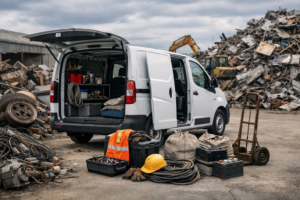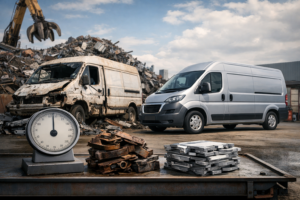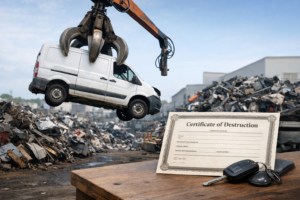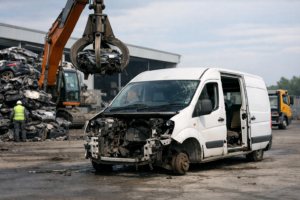
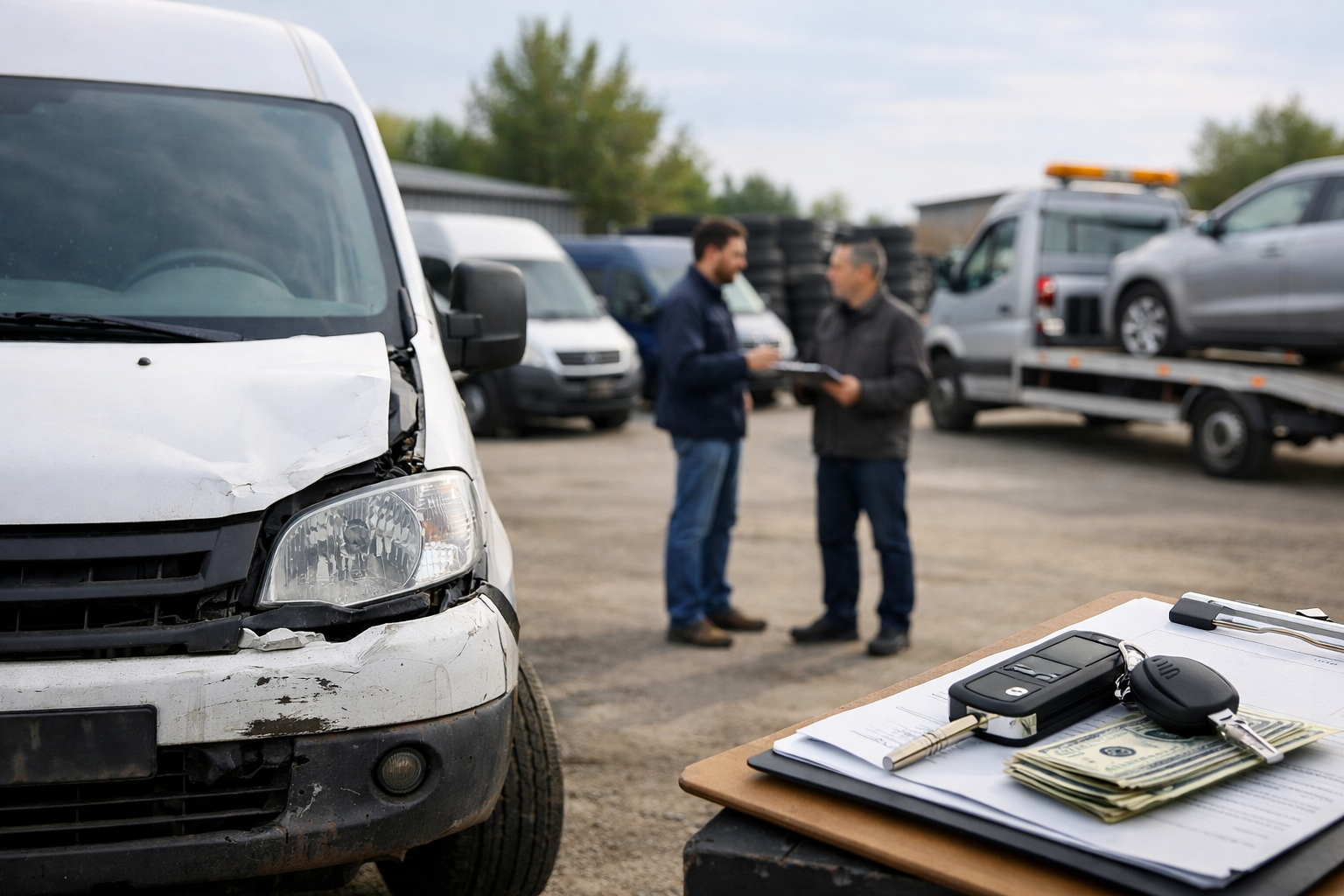
You have a van that won’t start, can’t be driven, and is currently sitting on your drive like a very large, very expensive garden ornament. The good news is that you can absolutely sell it — today, for real money, without a recovery truck nightmare — and this guide explains exactly how.
What Is a Non-Runner Van, and Why Does Selling One Feel So Complicated?
A non-runner van is precisely what it sounds like: a van that cannot, under its own power, move from A to B. It might have a seized engine, a dead battery, catastrophic gearbox failure, or simply a fault so mysterious that three mechanics have shrugged at it in succession. Whatever the reason, it won’t start, it won’t drive, and — here is the bit that catches people out — it almost certainly cannot be legally moved on a public road without either a trade plate or a recovery vehicle.
That last point is where most van owners immediately panic, assume the whole thing is impossible, and end up either abandoning the van or accepting a laughably low offer from the first person who turns up with cash and a low-loader. Neither of those outcomes is necessary.
Technical Definition — What “Non-Runner” Actually Means in Practice
In the context of selling a vehicle in the UK, a non-runner is any vehicle that is mechanically or electrically incapable of being driven. This is distinct from a vehicle that is merely untaxed or uninsured — a van can be perfectly capable of driving but still legally off-road if it’s on a Statutory Off Road Notification (SORN). A SORN van is a van the owner has told the DVLA is not being used on public roads; it may or may not actually run.
The distinction matters enormously when you’re trying to sell. A SORN van that runs is relatively straightforward to sell — you tax it for a month, drive it to a buyer, done. A SORN van that also won’t start is a different problem entirely, because now you’ve got a vehicle that is both legally off-road and physically incapable of going anywhere under its own steam. That’s the situation this guide is specifically for.
Note
If your van is on SORN, do not attempt to drive or tow it on a public road without a trade plate or proper recovery documentation. The fine starts at £2,500 and the insurance implications are considerably worse.
How Selling a Non-Runner Van Actually Works
Think of it like selling a house that needs complete renovation. You have three types of buyer: the developer who’ll pay properly because they know what they’re doing with it, the cash buyer who’ll lowball you because they can, and the auction route that’s unpredictable but occasionally brilliant. Vans work the same way.
1
Establish what you actually have
Before you contact anyone, know your van’s make, model, year, mileage, and — crucially — what’s actually wrong with it. “It won’t start” is not a description; “it won’t start, the engine turns over but doesn’t fire, and a mechanic told me the injectors are gone” is. Buyers who specialise in non-runners will ask, and the more specific you are, the faster you’ll get a real offer rather than a vague number that evaporates when they see it.
2
Understand your SORN and logbook situation
If your van is on SORN, you need to tell any buyer that upfront. It affects how they collect it — they’ll need to arrange recovery or use trade plates — and it affects the paperwork. Make sure you have the V5C (the logbook) to hand. Selling a van without a V5C is possible but will reduce your offer, because the buyer faces extra DVLA admin to establish ownership.
3
Get quotes from specialist buyers, not just scrapyards
This is the step most people skip, and it costs them hundreds of pounds. Scrapyards buy your van by weight. Specialist non-runner buyers buy it by what they can do with it — repair and resell, sell van for parts, or strip and sell components individually. A Transit with a seized engine might be worth £200 at a scrapyard and £600 to a specialist who knows the bodywork is immaculate and the gearbox is fine.
If you want to get a quote for your non-running van from a specialist buyer, that’s the kind of buyer who will actually come and collect it, handle the SORN logistics, and pay you properly rather than treating your van as a lump of recyclable metal.
4
Arrange collection — and don’t pay for it
Any reputable specialist buyer of broken down van sales will collect for free. If someone is asking you to pay for recovery on top of accepting a low price, walk away. The collection cost is their problem, not yours; it’s already factored into their offer.
5
Complete the paperwork properly
When the van goes, fill in the V5C transfer section and send the relevant part to the DVLA immediately. If the van is on SORN, notify the DVLA that it’s been sold. This protects you from any future liability — parking fines, road tax demands, or anything else that happens to that van after it leaves your drive.
Real-World Examples — What This Looks Like in Practice
Example one: The van that won’t start after sitting for eight months. A plumber’s Transit has been on SORN since a head gasket failure. It’s insured, it’s documented, but it hasn’t moved. A scrapyard offers £180. A specialist non-runner buyer collects it for free and pays £550, because the van is a popular model with strong parts demand and the body is solid.
Example two: The broken down van sale after a motorway breakdown. A courier’s Sprinter dies on the M6. It’s recovered to a yard, deemed uneconomical to repair, and the owner is facing storage fees on top of everything else. A specialist buyer collects directly from the recovery yard — the owner never has to touch it again — and pays £400 for a van the owner had mentally written off entirely.
Example three: The SORN van with no MOT and an unknown fault. An inherited van, sitting on a driveway, SORN’d for two years. Nobody knows what’s wrong with it because nobody’s tried to start it. A specialist buyer offers a provisional price, collects it, inspects it, and confirms the price — because reputable buyers don’t dramatically revise their offer downward on arrival, which is a trick the less reputable ones absolutely do pull.
Common Misconceptions — Things People Get Completely Wrong
Misconception one: “A non-runner is only worth scrap value.” This is the one that costs people the most money. Scrap value is what the metal weighs. A van is worth considerably more than its weight in steel if the parts are salvageable, the body is straight, or the model is in demand. A van won’t start doesn’t mean a van is worthless — it means the engine has a problem, and everything else might be perfectly fine.
Misconception two: “I can’t sell it because it’s on SORN.” SORN status doesn’t prevent a sale. It prevents you from driving it on public roads, which is a different thing entirely. You can sell a SORN van sell it to a specialist buyer who will handle the collection and the DVLA notification. The SORN transfers with the vehicle until the new owner either taxes it or scraps it.
Misconception three: “I should sell it for parts myself to get more money.” In theory, yes. In practice, stripping a van and selling components individually on eBay takes weeks, requires storage space for oily engine parts, involves endless messages from people offering £12 for a £90 alternator, and ends with you still having a shell on your drive six months later. Unless you genuinely enjoy that process, the specialist buyer route gets you more money per hour of your time by an enormous margin.
Why It Matters — The Practical Bit
The UK has a significant number of vans sitting on driveways, in yards, and behind garages because their owners don’t know they have options. A van that won’t start is not a dead end; it’s a van with a mechanical problem that someone else will pay to solve. The specialist non-runner market exists precisely because there is money to be made from these vehicles — and some of that money belongs to you, not to the scrapyard.
Pro tip
Get at least three quotes before accepting anything. The spread between the lowest and highest offer for a non-runner van can be genuinely shocking — we’re talking hundreds of pounds, not pocket change.
Key takeaways
- A non-runner van can be sold for real money — scrap value is almost never the best offer available
- SORN status does not prevent a sale; specialist buyers handle the collection and DVLA paperwork
- Specialist buyers pay more than scrapyards because they value parts, bodywork, and model demand — not just weight
- Free collection is standard from reputable buyers; never pay for recovery on top of accepting a low price
- Knowing what’s wrong with your van (even approximately) gets you faster, more accurate quotes
Frequently Asked Questions
Can I sell a van that won’t start without a V5C?
Yes, but it will likely reduce your offer. Without the V5C, the buyer faces additional DVLA work to establish ownership, and some buyers won’t proceed at all. If you’ve lost the V5C, apply for a replacement (V62 form, small fee) before you start getting quotes — it’s worth the wait.
How much is a non-runner van worth?
It genuinely depends on the make, model, year, mileage, what’s wrong with it, and what the body condition is like. A popular model with a repairable fault and solid bodywork can be worth several hundred pounds to a specialist buyer. A high-mileage van with multiple faults and a damaged body is worth less. Get three quotes and compare — the range will tell you a lot.
Will a specialist buyer collect from anywhere in the UK?
Most reputable specialist non-runner buyers cover the whole of mainland UK. Always confirm collection area and whether it’s genuinely free before committing.
What happens to my SORN when I sell the van?
When you transfer the V5C to the new owner, the SORN transfers with it. Notify the DVLA that you’ve sold the vehicle; they’ll confirm you’re no longer liable. The new owner then deals with the SORN — taxing the van, scrapping it, or keeping it off-road under their own name.
Is it legal to tow a SORN non-runner van to a buyer?
Only if the towing vehicle has trade plates, or the van is being moved by a recovery operator with the appropriate insurance. You cannot simply hitch it to your car and drive it to a buyer — that’s illegal regardless of how short the journey is. The buyer should collect it; that’s their job.