Your turbo has just given up. There’s a cloud of blue smoke in your mirror, the van sounds like a broken hairdryer, and you’re now standing roadside Googling whether to repair it, scrap it, or find someone who’ll take it off your hands. If you want to sell a van with turbo failure in the UK, the short answer is: yes, you absolutely can — and whether that’s smarter than repairing it depends entirely on numbers that most advice articles conveniently forget to include. Let’s fix that.
Key takeaways
- Turbocharger replacement in a UK van typically costs £800–£2,500 in parts and labour — often more than the van’s post-repair market uplift
- A van with a blown turbo still has real value to specialist buyers; scrapping it is almost always the worst financial outcome
- The repair-vs-sell decision hinges on three figures: repair cost, post-repair value, and what a buyer will offer as-is
- Selling a van with a turbo fault is legal and straightforward provided you disclose the fault honestly
- Getting a same-day cash offer takes minutes and gives you a concrete number to compare against a repair quote
What does turbo failure actually mean for your van?
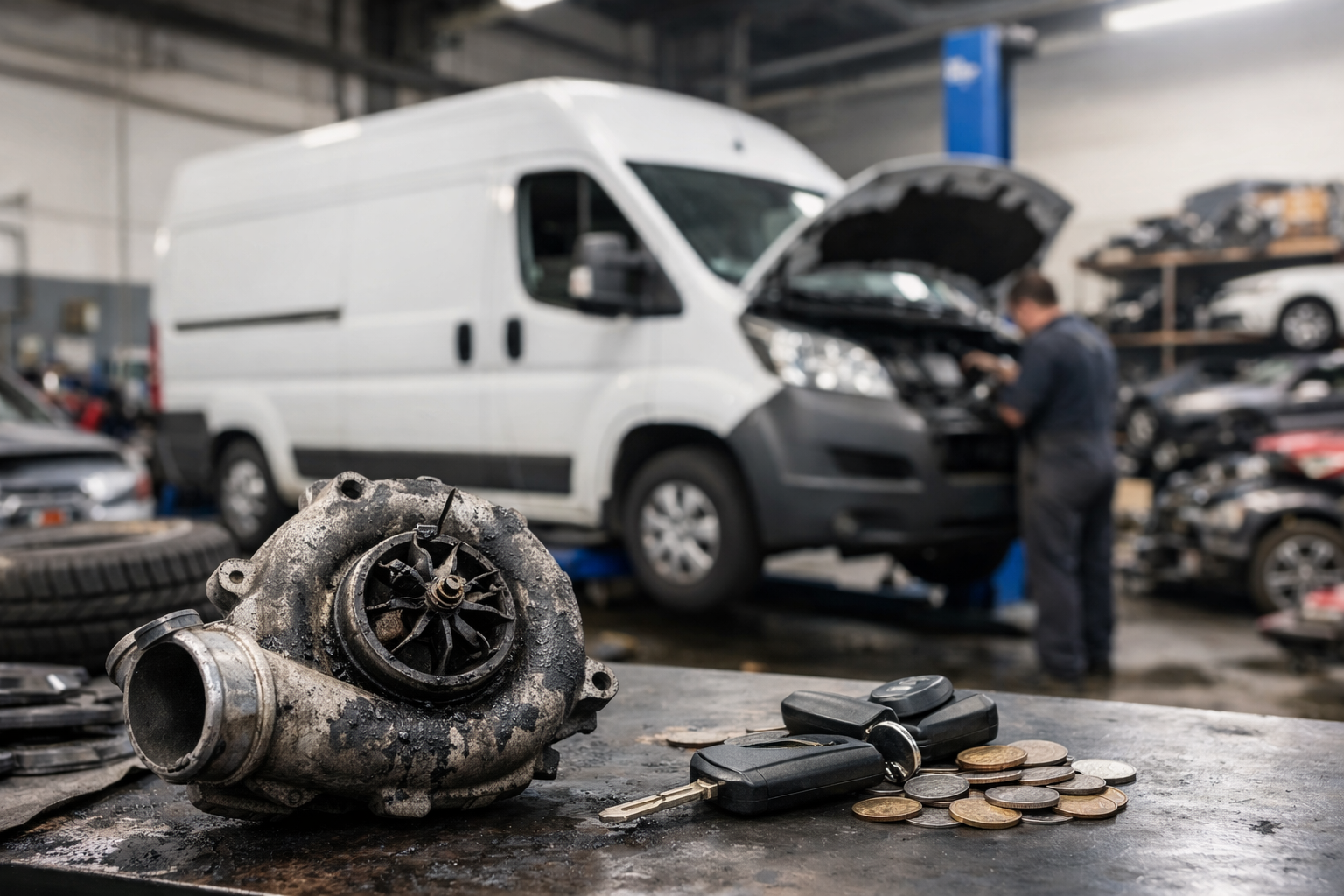
A turbocharger is a device that forces extra air into the engine, boosting power and efficiency — particularly important in modern diesel vans where the whole fuel economy case rests on it working properly. When it fails, the engine loses power, fuel consumption climbs, and driving it further risks catastrophic engine damage from oil contamination or metal debris entering the intake.
The symptoms are hard to miss. Blue or white smoke from the exhaust, a high-pitched whine, sluggish acceleration, and an oil warning light that seems to have developed opinions — these are the calling cards of a turbocharger failure van situation that isn’t going to resolve itself overnight.
Warning
Continuing to drive a van with a suspected blown turbo risks turning a £1,200 repair into a £4,000+ engine rebuild. If the turbo sheds debris into the engine internals, you’re in a different conversation entirely.
How much does it actually cost to repair a van turbo in the UK?
Repair costs for a turbo fault break down into parts and labour, and both vary considerably depending on your van’s make, age, and where you take it.
Here’s what UK garages are typically charging right now:
- Budget reconditioned turbo (pattern part): £200–£450 for the unit
- OEM or quality remanufactured turbo: £450–£1,100 for the unit
- Labour: £300–£600 at an independent garage; £500–£900 at a franchised dealer
- Additional work (oil feed pipes, intercooler clean, oil flush): £100–£250
So the realistic all-in cost for a van turbo blown sell scenario where you’re choosing repair sits somewhere between £800 and £2,500, with the upper end applying to larger or more complex vehicles like a Transit Custom, Sprinter, or Ducato with a twin-scroll or variable-geometry unit.
Pro tip
Always get the intercooler inspected when replacing a turbo. If the old unit shed metal fragments, they’ll be sitting in the intercooler waiting to destroy the new one. Skipping this step is how people end up paying for two turbos.
Is a reconditioned turbo worth the risk?
A quality remanufactured turbo from a reputable UK supplier is generally fine — units from companies with a warranty of 12 months or more are a reasonable bet. A cheap pattern part from an unverified source is gambling with your engine. The difference in price between a decent recon unit and a lottery ticket is about £150. It’s not a difficult calculation.
What is a van with turbo failure actually worth?
This is the number nobody tells you, and it’s the number that makes the whole repair-vs-sell decision make sense.
A van’s value with a blown turbo depends on its age, mileage, body condition, and make. A 2015 Ford Transit Custom with 90,000 miles and a turbocharger failure might be worth £4,500–£6,000 fully repaired and sold privately. With a blown turbo, a specialist buyer might offer £2,500–£3,800 for it — depending on the rest of the vehicle’s condition.
Run those numbers against a £1,400 repair bill and the arithmetic gets interesting very quickly.
If the van is older — say a 2010 Vivaro with 160,000 miles — the post-repair private sale value might only be £2,200. The repair could cost £900. You’ve spent £900 to gain perhaps £600 in sale value, while spending two weeks without a van and discovering the gearbox also has opinions.
The three numbers you need before making any decision
- Repair cost — get two quotes from independent garages, not just the dealer
- Post-repair realistic sale value — not the optimistic AutoTrader listing price; the price at which similar vans actually sell
- As-is offer from a specialist buyer — this takes ten minutes to find out and costs nothing
The gap between numbers two and three, minus number one, tells you whether repairing is worth it. If the gap is smaller than the repair cost, you’re essentially paying to make someone else’s van nicer.
Repair vs. scrap vs. sell as-is: a direct comparison
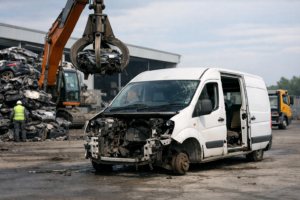
Scrapping a van with a blown turbo is the option that sounds sensible but rarely is. Scrap metal prices in the UK currently sit around £100–£200 for a typical van — a figure that has nothing to do with the vehicle’s actual mechanical or parts value. You’re essentially selling it by the kilogram, which is a terrible way to value something with a working gearbox, good bodywork, and four decent tyres.
If you’re considering selling a broken van to a specialist buyer, you’re dealing with someone who values the whole vehicle — not just its weight in steel. The difference between scrap value and a specialist as-is offer can easily be £1,000–£2,500 on the same vehicle.
Here’s the honest comparison:
| Option | Typical outcome | Time | Hassle |
|---|---|---|---|
| Repair and sell privately | Best financial return if the maths work | 2–6 weeks | High |
| Sell as-is to specialist buyer | Fast, fair, no repair risk | 24–48 hours | Very low |
| Scrap it | Almost always the worst return | 1–3 days | Low |
Is it legal to sell a van with a turbo fault in the UK?
Yes — completely legal, provided you disclose the fault. Selling a van with a known mechanical defect without declaring it exposes you to claims under the Consumer Rights Act 2015 if you’re selling to a consumer, and is simply dishonest if you’re selling to anyone.
The good news is that specialist buyers who purchase vans with turbo faults already know what they’re buying. You’re not hiding anything; you’re describing the condition accurately and getting a price that reflects it. That’s a transaction, not a problem.
Note
If you sell privately without disclosing a known turbo fault, the buyer can pursue you for misrepresentation. It’s not worth it. Disclosure protects you as much as it protects them.
Frequently Asked Questions
Can I sell a van with a turbo fault without fixing it first?
Yes. Specialist buyers purchase vans in non-running or fault condition regularly. You describe the fault, they assess the vehicle’s overall condition, and they make an offer based on what it’s worth to them — not what it would cost you to fix. The offer will reflect the turbo issue, but you avoid the repair bill, the downtime, and the risk of further faults emerging during a repair.
Does a blown turbo write off a van?
Not automatically. A van is only a write-off when the cost of repair exceeds its market value. On older or high-mileage vans, a turbo repair can push past that threshold — but on a relatively recent, low-mileage vehicle, the turbo failure van value remains substantial even with the fault present. The van’s worth more than its scrap weight; the question is finding the right buyer.
How long does a van turbo replacement take at a garage?
Most independent garages complete a turbo replacement in one to two days. Add time if parts need to be ordered (typically 24–48 hours for common van models), and allow for additional time if the oil feed pipes, intercooler, or air intake system need attention. Budget for the van being off the road for three to five working days in a realistic scenario.
Will a turbo fault show up on a diagnostic check?
Yes. A fault code relating to boost pressure, turbo speed sensor, or wastegate control will typically be logged in the ECU and readable with a standard OBD-II diagnostic tool. However, some mechanical turbo failures — particularly bearing collapse — may not throw a code and are diagnosed by symptom and physical inspection instead.
What vans have the most expensive turbo repairs?
Generally, larger vans with variable-geometry turbos (VGT) or twin-turbo setups attract the highest repair costs. Mercedes Sprinter (OM651 engine), Volkswagen Crafter, and Ford Transit with the 2.0 EcoBlue engine tend to sit at the upper end. Smaller vans like the Renault Trafic or Vauxhall Vivaro with the 1.6 BiTurbo can also be expensive due to the dual-turbo configuration.
Can I get a same-day offer if I want to sell a van with a turbo fault?
Yes. Specialist buyers who deal in broken or fault-condition vans typically provide online or phone-based valuations within minutes, with collection arranged within 24–48 hours. You’ll need to describe the van’s condition honestly — make, model, mileage, body condition, and the nature of the fault — and they’ll give you a figure to compare against whatever a garage has quoted for the repair.
What to do next
Get two things before you make any decision: a repair quote from an independent garage (not the dealer — their labour rates are punishing), and an as-is offer from a specialist buyer. Both take less than a day to arrange and cost nothing. Once you have both numbers, the right answer becomes obvious — and it’s rarely the one that involves spending £1,500 hoping the rest of the van holds together.
If the maths don’t favour repair, you don’t have to scrap it and watch a thousand pounds of value disappear. There are buyers who want exactly what you have.