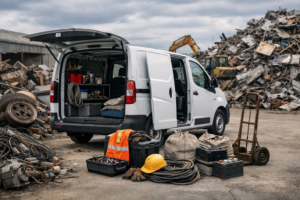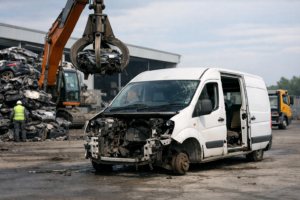
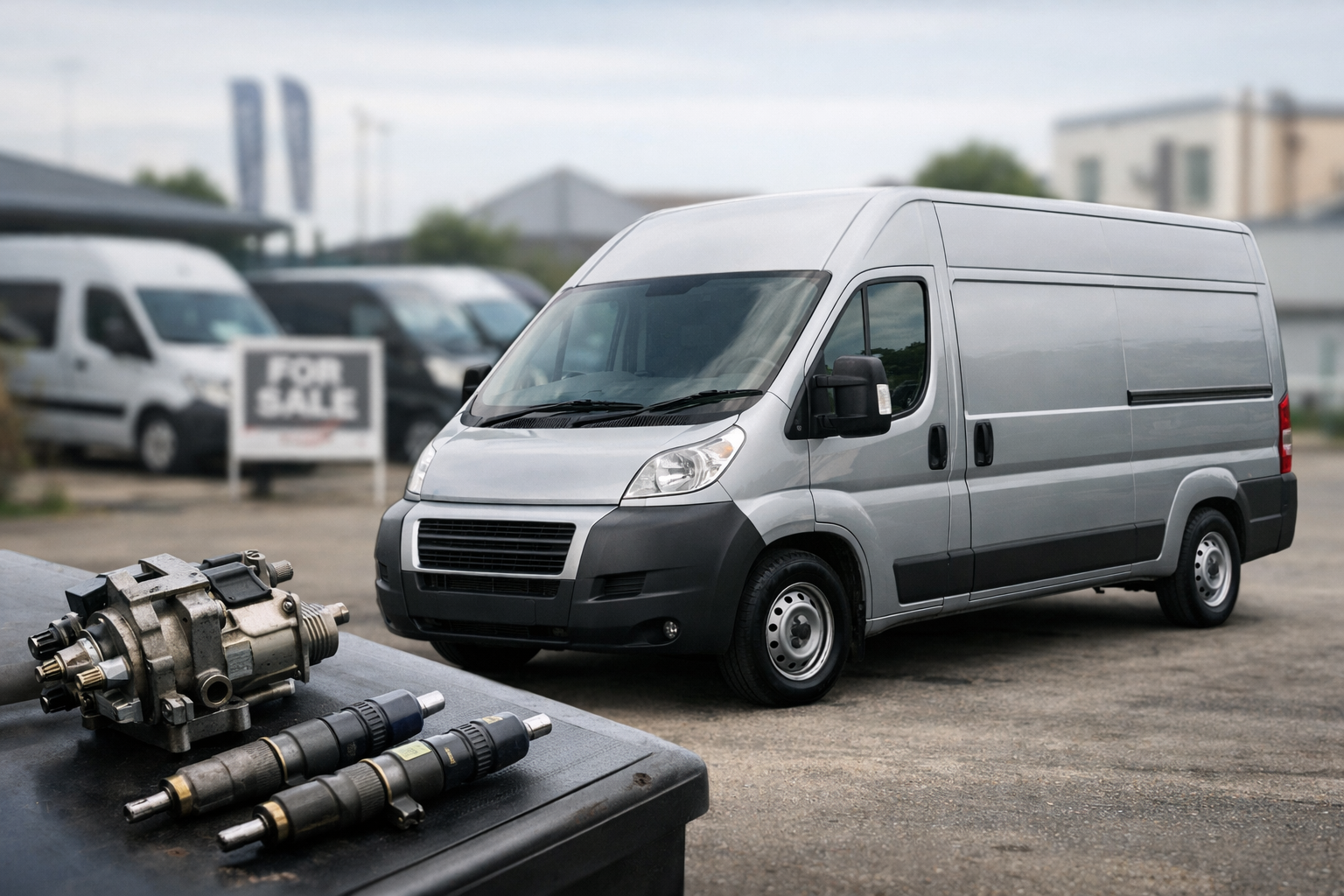
Your van has a fuel pump or injector fault. You need to know what it’s worth — and whether anyone will actually buy it. The answer is yes. You can sell a van with injector problems in the UK today, without repairing it first. This article tells you exactly how, what the fault really means for your offer, and why most owners misdiagnose the problem in the first place.
Key takeaways
- Injector and fuel pump faults are frequently misdiagnosed as DPF or engine failure — knowing the real fault gets you a more accurate offer
- You can sell a van with injector problems in the UK without fixing anything first
- The severity of the fault (single injector vs. full fuel system failure) directly affects what buyers will pay
- Specialist buyers who purchase faulty vans exist specifically for situations like yours
- Getting multiple quotes takes minutes and costs nothing — your van has value even in its current state
What Injector and Fuel Pump Faults Actually Mean for Your Van
Fuel injectors are precision components that spray diesel into the engine’s combustion chamber at exactly the right moment and pressure. When one fails, the engine misfires, loses power, or runs roughly. When a fuel pump fails — the high-pressure pump that feeds those injectors — the engine may not start at all, or it cuts out under load.
These are not the same fault, and the difference matters when you’re selling. A single faulty injector on a Ford Transit or Vauxhall Movano might cost £200–£400 to replace. A failed high-pressure fuel pump, or multiple injectors contaminated by a “diesel bug” (a microbial growth that degrades fuel quality), can push repair costs past £1,500–£3,000 on a common rail diesel system.
Warning
Do not keep driving a van with a suspected fuel pump fault. Running a high-pressure common rail system with insufficient fuel pressure can cause metal debris to circulate and destroy all four injectors simultaneously — turning a manageable repair into a write-off.
Why Owners Get This Wrong: The Misdiagnosis Problem
Most van owners assume the worst when the engine warning light comes on alongside rough running or black smoke. The immediate assumption is often DPF (diesel particulate filter) blockage or a failing turbo — two faults that dominate online forums and are heavily marketed by garages.
In reality, a blocked injector produces almost identical symptoms to a blocked DPF: loss of power, increased fuel consumption, rough idle, and excessive smoke. The difference only becomes clear with a proper diagnostic scan that reads live fuel pressure data and individual injector return rates. Without that scan, owners guess — and often guess wrong.
This misdiagnosis has a direct financial consequence. Sellers who believe they have a “blown engine” often accept far less than their van is worth. Sellers who know they have a single faulty injector can present that fact clearly and negotiate a fair price.
Pro tip
Before you contact any buyer, get a diagnostic report from a garage or mobile diagnostic service. A printout showing fault codes costs around £50–£80 and can meaningfully increase the offer you receive by proving the fault is specific and contained.
How the Fault Severity Affects Your Van’s Value
Not all fuel system faults are equal. Buyers price faulty vans on the cost and complexity of the repair they’re taking on. Here’s how severity typically breaks down:
- Single injector fault (one cylinder misfiring): Lowest repair cost, highest residual value. The van is often still driveable at low speed.
- Multiple injector faults: Moderate repair cost. Common after contaminated fuel or a “diesel bug” infection. Van may start but run very poorly.
- High-pressure fuel pump failure: Higher cost, but a known and well-understood repair. Van typically won’t start or cuts out at speed.
- Fuel pump failure with injector contamination: The most expensive scenario. Metal debris from a failing pump can score injector seats and require full system replacement.
- Fuel system fault combined with secondary damage (e.g., bent con rod from hydraulic lock): This moves into engine damage territory and will significantly reduce any offer.
Knowing which category your van falls into before you call a buyer is the single most effective thing you can do to protect your payout. If you’re ready to move forward, you can get a fast quote through a service that specialises in selling broken and faulty vans — no repair required, no obligation.
What Buyers Look for When You Sell a Van With a Fuel System Fault
Specialist faulty van buyers are not gamblers. They assess every vehicle against the cost of repair, the parts availability for that make and model, and the van’s value once fixed or broken for parts. They look at:
- Make, model, and age: A 2018 Ford Transit with a single injector fault has strong parts availability and a healthy post-repair value. A 2009 van with the same fault is a different calculation.
- Mileage: High mileage reduces post-repair value and increases the likelihood of additional faults being found.
- Fault documentation: A diagnostic report, any garage quotes for repair, and a clear description of symptoms all increase buyer confidence — and offers.
- Body and chassis condition: A van with a fuel system fault but a clean body and good tyres is worth more than one that also has corrosion or accident damage.
- Van injector fault buyer demand for your model: Some vans — particularly Transits, Sprinters, and Trafics — have strong buyer demand even with faults, because the repair ecosystem around them is mature and parts are cheap.
How to Sell a Van With Injector Problems in the UK: The Process
1
Identify the fault as accurately as you can
Get a diagnostic scan if you haven’t already. Note the fault codes, any symptoms (smoke colour, when it cuts out, whether it starts), and any garage quotes you’ve received. The more specific you can be, the better your offer will be.
2
Gather your paperwork
Find the V5C logbook, any service history, MOT certificates, and finance settlement figures if the van is on finance. Buyers need the V5C to complete the sale legally. Outstanding finance must be settled before or at the point of sale.
3
Get multiple quotes
Contact at least two or three specialist faulty van buyers. Describe the fault honestly and provide the diagnostic information you have. Quotes are free and non-binding. The spread between the lowest and highest offer can be significant — especially for a diesel injector van value calculation, where repair cost estimates vary between buyers.
4
Accept an offer and arrange collection
Reputable buyers collect the van from your location, handle the DVLA paperwork, and pay on the day of collection or via same-day bank transfer. You do not need to transport a non-starting van to a buyer’s premises.
Note
If your van is on a public road and not roadworthy, inform the buyer in advance. Most specialist buyers have recovery vehicles and can collect non-runners without additional charge.
Frequently Asked Questions
Will anyone buy a van with a fuel pump failure?
Yes. Specialist buyers purchase vans with fuel pump failure regularly. A fuel pump failure van sell is straightforward for buyers who understand the repair cost and have the trade relationships to source parts at a discount. The van still has value — in parts, as a repair project, or as trade stock.
How much will I lose compared to a working van?
The reduction depends on the repair cost the buyer is absorbing. A single injector fault might reduce the offer by £300–£600 compared to a fully working equivalent. A full fuel system failure with injector contamination could reduce it by £1,500–£3,000. These are ranges, not guarantees — your specific van’s age, mileage, and model all affect the final figure.
Can I sell a van with injector problems if it won’t start?
Yes. Non-starting vans are bought every day. Buyers will collect using a recovery vehicle. Be upfront about the van’s condition when you request a quote so the offer reflects the actual situation.
Does outstanding finance stop me selling?
Outstanding finance means you do not legally own the van outright, so you cannot sell it without settling the finance first. Some buyers will handle this by paying the finance company directly from the sale proceeds and giving you the remainder. Confirm this process before you agree to anything.
Is it worth repairing the van before selling?
Rarely. The cost of repair rarely adds its full value back to the sale price when selling privately — and a garage repair on a faulty fuel system carries no guarantee the buyer will trust. Selling as-is to a specialist buyer is usually faster and produces a comparable net return once repair costs are subtracted.
What’s the difference between selling privately and using a specialist buyer?
Selling privately with a fuel system fault is difficult. Most private buyers want a working van, and those who don’t will negotiate hard without the knowledge to price the fault fairly. Specialist buyers — those who specifically handle sell van fuel system fault cases — price accurately, move quickly, and handle all the paperwork. The trade-off is a lower headline price than a private sale of a working van, but that comparison is not realistic given the fault.
Your van has value right now, fault and all. The fastest way to find out exactly how much is to describe the fault clearly and get a quote from a buyer who specialises in this. No repairs. No guesswork. Just a straightforward offer based on what your van actually is.